What Are the Best Homeopathic Remedies for Bedwetting?
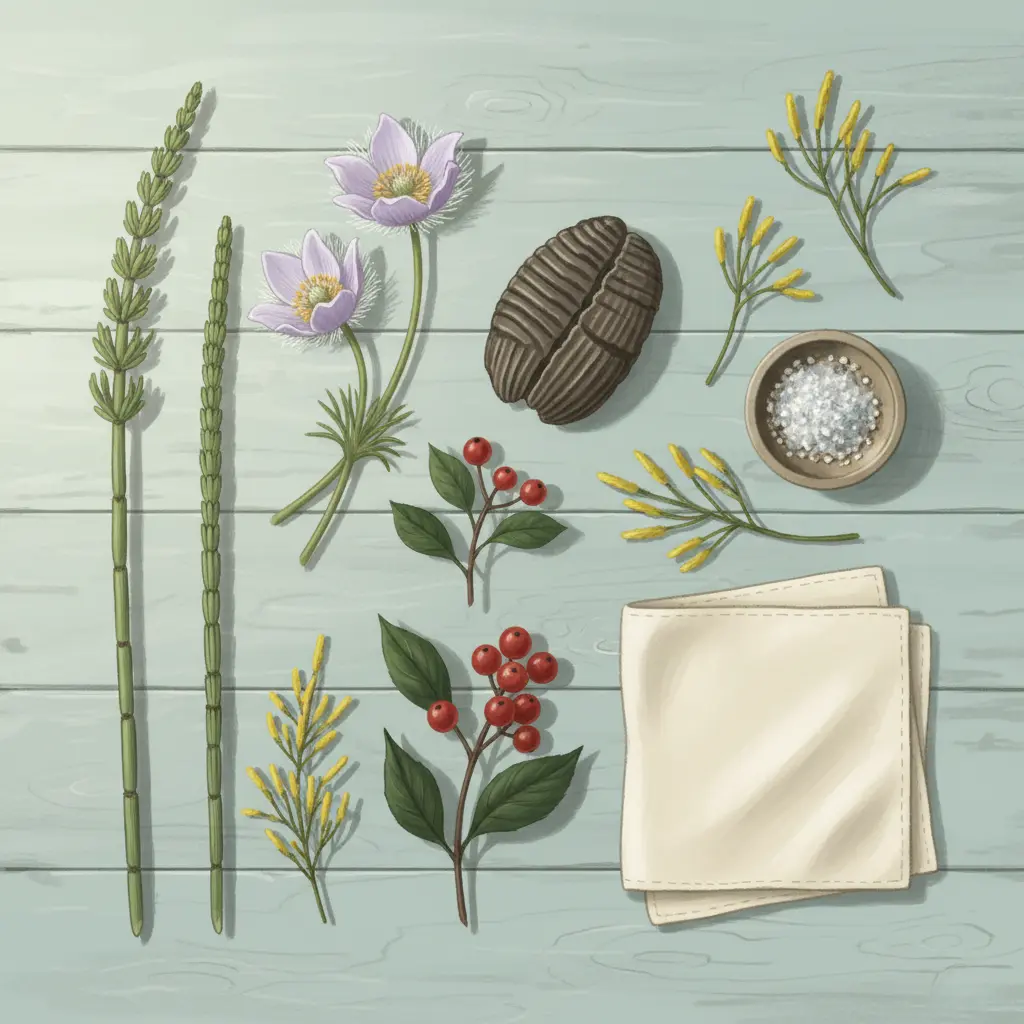
The best homeopathic remedies for bedwetting include Causticum (wets early in the night, leaks on coughing or laughing), Sepia (wets in the first sleep, almost impossible to wake), Pulsatilla (timid weepy child, worse lying down), Equisetum (wetting with dreams and no clear cause), Belladonna (restless sleep, vivid frightening dreams), Kreosotum (very deep sleep, dreams of urinating, foul urine), Lycopodium (bossy at home, anxious outside), and Natrum Muriaticum (the reserved child who holds grief in). Each is chosen from the when and how of the wetting and the kind of child it happens to — the self-expressions of the organism that point to a remedy. And first, the reassurance every parent deserves: nighttime wetting is common and usually outgrows itself.
Bedwetting — nocturnal enuresis — is one of the most ordinary things a young body does, and the great majority of children dry out with nothing wrong. So the frame here is not "fixing a problem." Two children who both wet the bed can need entirely different remedies, because what differs is the picture: the time of night, the depth of sleep, the dreams, and the temperament of the child who carries it.
Quick Answer
| Remedy | Best when… |
|---|---|
| Causticum | Wets in the first part of the night; involuntary leak on coughing, sneezing, laughing; sensitive child |
| Sepia | Bed wet almost as soon as the child falls asleep; sleeps so deeply they cannot be roused |
| Pulsatilla | Timid, weepy, affectionate child; worse lying down; classic after measles, worse in autumn |
| Equisetum | Wetting with dreams of crowds or of urinating; no clear cause beyond habit |
| Belladonna | Restless, twitchy sleep; vivid, frightening dreams; flushed face, hot head |
| Kreosotum | Sleeps too profoundly to wake; dreams of passing urine; urine smells offensive |
| Lycopodium | Domineering at home but anxious and timid away from it; red sand in the diaper or pot |
| Natrum Muriaticum | Reserved child who bottles up grief; wets after loss or upset; can't urinate when watched |
Notice how few are chosen on the wetting alone — most turn on when in the night it happens, how deeply the child sleeps, or who the child is by temperament.
1. Causticum — Wets Early, Leaks When Laughing
Best when: The child wets during the first part of the night, and by day a cough, sneeze, or laugh brings an involuntary leak.
Causticum is a remedy of weakened, almost paralytic bladder control: involuntary urine on coughing, walking, blowing the nose, or sneezing, and "involuntary during first sleep at night, or from slightest excitement." You see both halves of one weakness — the nighttime wetting and a daytime giggle-leak when the child laughs hard at play. These tend to be sensitive children, sometimes worn down by a fright or a long illness. 30C once in the evening is a common start. One detail prevents a classic error: Causticum is better in damp wet weather and worse in dry cold air.
Worse:
- Dry cold air, clear fine weather
- Cold winds and drafts
- Coughing, sneezing, laughing
- Emotional excitement, fright
Better:
- Damp wet weather
- Warmth of bed
Quick reference: Wets early in the night + leaks on coughing/laughing + sensitive child + better in damp weather = Causticum.
2. Sepia — Wets in the First Sleep, Cannot Be Roused
Best when: The bed is wet almost as soon as the child falls asleep, and they sleep so heavily that lifting them to the toilet barely works.
A line from the old materia medica is quoted almost verbatim: "The bed is wet almost as soon as the child goes to sleep, always during the first sleep." That timing — wetting in the first part of sleep, with a weak, relaxed bladder — is the Sepia signature, and the child is hard to wake during that first deep dip, which is why the wetting goes unnoticed until morning. 30C in the evening is a reasonable trial; a higher single dose under guidance suits a sluggish pattern. Sepia is better from vigorous exercise — a child who comes alive running and dancing but droops at rest fits the larger remedy.
Worse:
- During and after the first sleep
- Cold air, dampness
- Standing, sitting still
Better:
- Vigorous motion, running, dancing
- Warmth of bed
Quick reference: Wet almost as soon as asleep + first-sleep timing + impossible to rouse = Sepia.
3. Pulsatilla — The Timid, Weepy Child Worse Lying Down
Best when: A gentle, tearful, affectionate child wets at night, the leak coming on while lying down, and the wetting started after measles or worsens in autumn.
Pulsatilla is one of the most recognizable temperaments in homeopathy: mild, yielding, weeps and is consoled easily, wants company and cuddles. The urinary picture matches the softness — involuntary urination at night during sleep, and on lying down, coughing, or sneezing — with a strikingly specific keynote: nocturnal bedwetting after measles, worse in autumn, "especially little girls." If a child was dry, came through measles or another feverish illness, and the wetting arrived afterward, Pulsatilla rises to the front of the list. 30C in the evening suits recent-onset cases. This child is worse in warm stuffy rooms and craves open air, often kicking the covers off.
Worse:
- Lying down
- Warm stuffy rooms, getting too hot in bed
- Autumn, after measles
- Coughing, sneezing, laughing
Better:
- Cool fresh open air
- Gentle consolation and being held
Quick reference: Timid, weepy, affectionate + worse lying down + onset after measles or in autumn = Pulsatilla.
4. Equisetum — Wetting With Dreams, No Clear Cause
Best when: A child wets at night who is otherwise well — no infection, no obvious emotional cause — often dreaming, sometimes of crowds, or dreaming of passing urine as it happens.
Equisetum (horsetail) has a strong affinity for the urinary organs and is one of the most plainly "bedwetting" remedies in the materia medica. Its keynote is bedwetting in children with dreams or nightmares while passing urine, and "nocturnal bedwetting of children without causes except habit" — a peculiar provings detail recurs, the child wetting while dreaming and "always sees a crowd of people." When you have searched for a reason and found none, and the wetting seems a stubborn habit tied to dreaming, Equisetum fits the very absence of cause. 30C in the evening is the usual strength. It earns its place where temperament and cause give you nothing.
Worse:
- During and after sleep, with dreaming
- A persistent urge to urinate
Better:
- Few clear ameliorations — choose on the dreaming-without-cause picture
Quick reference: No cause but habit + wets while dreaming, often of crowds = Equisetum.
5. Belladonna — Restless Sleep and Vivid Dreams
Best when: A flushed, hot-headed child sleeps restlessly — jerking, twitching, crying out — with vivid, frightening dreams, and wets in the middle of that turbulent sleep.
Belladonna is famous for sudden congestive states, and its sleep is anything but quiet: restless, with jerks and kicks, screaming out, and vivid, frightful dreams of fire, robbers, or falling that the child often can't remember on waking. Involuntary urination comes at night and when sleepy by day. There is a classic case on record of a feverish child, scarlet-cheeked with dilated pupils, who wet the bed and woke screaming — the whole Belladonna sensorium turned up loud. This is wetting that rides along with an overheated, over-stimulated nervous sleep, not the placid deep-sleep type. 30C in the evening fits the acute picture. Look for the flushed face, hot dry head, and a sleep that is too "switched on."
Worse:
- Restless, twitchy, dream-filled sleep
- Lying down
- Becoming overheated; light, noise, jarring
Better:
- Being kept warm and quiet
- After settled sleep
Quick reference: Restless jerking sleep + vivid frightening dreams + flushed hot head = Belladonna.
6. Kreosotum — Too Deep to Wake, Dreams of Urinating
Best when: The child sleeps so profoundly that lifting them to the toilet does nothing — they urinate while still asleep, often dreaming of passing urine, and the urine smells strongly offensive.
Kreosotum carries the deepest sleep of any remedy here. Its hallmark is "nocturnal bedwetting from too profound sleep, child cannot be awakened when taken up" — you can carry the child to the bathroom and they will wet without ever truly waking. Alongside this, the materia medica notes dreams of urinating and bedwetting "when the urine smells foul, offensive." That odor is a genuine differentiator: where most bedwetting urine is unremarkable, the Kreosotum stream smells strongly. The classic comparison is Sepia — both wet in the first sleep — but Kreosotum's stamp is the impossible-to-rouse depth plus the offensive odor. 30C in the evening is the common trial.
Worse:
- Profound, unrousable sleep
- First part of the night, while lying
- Coughing (can bring involuntary urine)
Better:
- Few clear ameliorations — choose on the depth-of-sleep and odor picture
Quick reference: Impossible to wake + dreams of urinating + foul-smelling urine = Kreosotum.
7. Lycopodium — Bossy at Home, Anxious Outside
Best when: A child who is domineering and demanding at home but timid, anxious, and lacking confidence away from it wets the bed — often with reddish "sand" left in the diaper or pot.
Lycopodium reveals one of the most useful temperament contrasts in homeopathy. At home the child can be headstrong, bossy, even tyrannical, ordering siblings and parents around; step outside, into school or a new situation, and the same child shrinks — anticipatory anxiety, fear of performing, low self-confidence. On the urinary side: involuntary urination, the child who cries before urinating, and the telltale "red sand found in the diaper" — a reddish, brick-dust sediment. When the temperament fits and you see that sediment, Lycopodium is strongly indicated. 30C is a fair starting strength, though it is a deep constitutional remedy and a stubborn case often does better in a practitioner's hands. Classically worse from 4 p.m. to 8 p.m.
Worse:
- 4 p.m. to 8 p.m.
- New situations, being away from home
- Anticipation, performing in front of others
Better:
- Warm drinks
- Motion, open air
Quick reference: Domineering at home + timid and anxious outside + red sand in the diaper = Lycopodium.
8. Natrum Muriaticum — The Reserved Child Who Holds Grief In
Best when: A reserved, sensitive child who keeps feelings inside wets the bed after a loss or upset, can't cry in front of others, and finds it hard to urinate when someone is watching.
Natrum Muriaticum is the great remedy of contained, unexpressed grief. The child is introverted, easily hurt, dwells on what wounded them, and will not weep where others can see — "cannot cry or express grief." Bedwetting in this picture often dates from something the child took to heart: a move, a bereavement, a disappointment never spoken about. The urinary keynote sits perfectly alongside the temperament — "difficulty urinating in the presence of others," with involuntary urine on coughing, laughing, or sneezing. The body holds on by day, then lets go in the privacy of sleep. Because this is grief-rooted and constitutional, 30C can be tried, but a child wetting since an emotional blow is one of the clearest cases for working with a homeopath. This child often craves salt and is worse from consolation.
Worse:
- After grief, loss, or unspoken upset
- Consolation and sympathy
- Being watched (cannot urinate in front of others)
Better:
- Privacy, being left alone to recover
- Open air
Quick reference: Reserved child + holds grief in + wets after a loss + can't urinate when watched = Natrum Muriaticum.
How to Choose Between These Remedies
The key differentiators:
- If the wetting comes in the first part of the night and the child is impossible to rouse → Sepia, or Kreosotum when the sleep is deeper still and the urine smells foul.
- If there are daytime leaks on coughing, sneezing, or laughing → Causticum ties the day and night picture together.
- If the child is timid, weepy, and worse lying down, especially after measles or in autumn → Pulsatilla.
- If sleep is restless and full of vivid, frightening dreams in a flushed, hot child → Belladonna.
- If you can find no cause at all beyond habit, and the child dreams — often of crowds — while wetting → Equisetum.
- If the temperament splits — bossy at home, anxious outside, with reddish sand in the pot → Lycopodium.
- If the wetting followed a grief in a reserved child who won't cry and can't urinate when watched → Natrum Muriaticum.
Bedwetting is selected far more by the child and the circumstances of the night than by the bare fact of a wet bed. Two seven-year-olds wet every night; one sleeps like a stone and needs Sepia, the other wets after a house move and needs Natrum Muriaticum. The diagnosis is the same. The remedy is not.
Frequently Asked Questions
How quickly do homeopathic remedies for bedwetting work?
When the remedy matches the child's pattern, parents often notice more dry nights within the first couple of weeks, strengthening over a month or two. Bedwetting is partly developmental, so improvement comes as a gradual rise in dry nights rather than an overnight switch. No change after several weeks usually means the picture was read wrong — reconsider the remedy.
Can I combine multiple homeopathic remedies for bedwetting?
The classical approach is one remedy at a time. A single well-chosen remedy lets you see whether it's working; a mixture muddies the picture. Choose the remedy that best fits the whole child, give it time, and observe. If it stalls, that points you toward a different single remedy.
What potency should I use for bedwetting?
For home use, 30C once daily in the evening is the usual start, continued a few weeks while you watch the dry-night count. A 200C may be used as a stronger, less-frequent dose, and LM potencies are generally reserved for a practitioner managing a deeper or recurrent case. Space out the doses once steady improvement appears.
When should I see a homeopathic practitioner for bedwetting?
For wetting that has persisted for years, returned after a long dry spell, or is clearly tied to a grief or upheaval, a practitioner can match the deeper constitutional picture — Lycopodium and Natrum Muriaticum especially reward that depth. Also worth booking if a few weeks of a well-chosen 30C haven't shifted anything.
Are these remedies safe for children?
Yes. Properly potentized remedies are gentle and well suited to children, which is part of why homeopathy is so often used in pediatric care. They don't act mechanically on the bladder; they work by prompting the child's own self-governing principle. What warrants conventional evaluation is a red flag — see below — not the remedy itself.
When to Seek Professional Care
Most bedwetting needs patience, not alarm — but a few signals call for a medical check first. If a child who was reliably dry suddenly starts wetting again, that change deserves attention rather than a remedy alone. If wetting comes with daytime accidents, pain or burning on urination, unusual thirst, or a foul or cloudy stream, have a clinician rule out a urinary infection. Sudden onset plus pain is the combination to act on. None of this is reason for worry in the ordinary, lifelong-since-birth pattern of nighttime wetting in an otherwise well child — there, the threshold where a homeopath becomes valuable is simply a case that's stubborn, recurrent, or rooted in something the child went through.
Related Reading
- Homeopathic Remedies for Bedwetting — the full condition guide with constitutional detail
- Homeopathic Remedies for Anxiety — for the anxious, timid temperaments behind some bedwetting
- What Are the Best Homeopathic Remedies for Children? — pediatric polychrests by temperament
- Causticum — Homeopathic Remedy Profile — the bladder-weakness and giggle-leak remedy in depth
- Keynote — how a single defining symptom guides selection
- Polychrest — what makes a remedy broad-acting
References
- Boericke, W. Pocket Manual of Homoeopathic Materia Medica. 9th ed. B. Jain Publishers, 2002.
- Kent, J.T. Lectures on Homoeopathic Materia Medica. B. Jain Publishers, 2006.
- Clarke, J.H. A Dictionary of Practical Materia Medica. B. Jain Publishers, 2005.
- Murphy, R. Nature's Materia Medica. 3rd ed. Lotus Health Institute, 2006.
- Hahnemann, S. Organon of the Medical Art. 6th ed. Wenda Brewster O'Reilly (ed.). Birdcage Books, 1996.