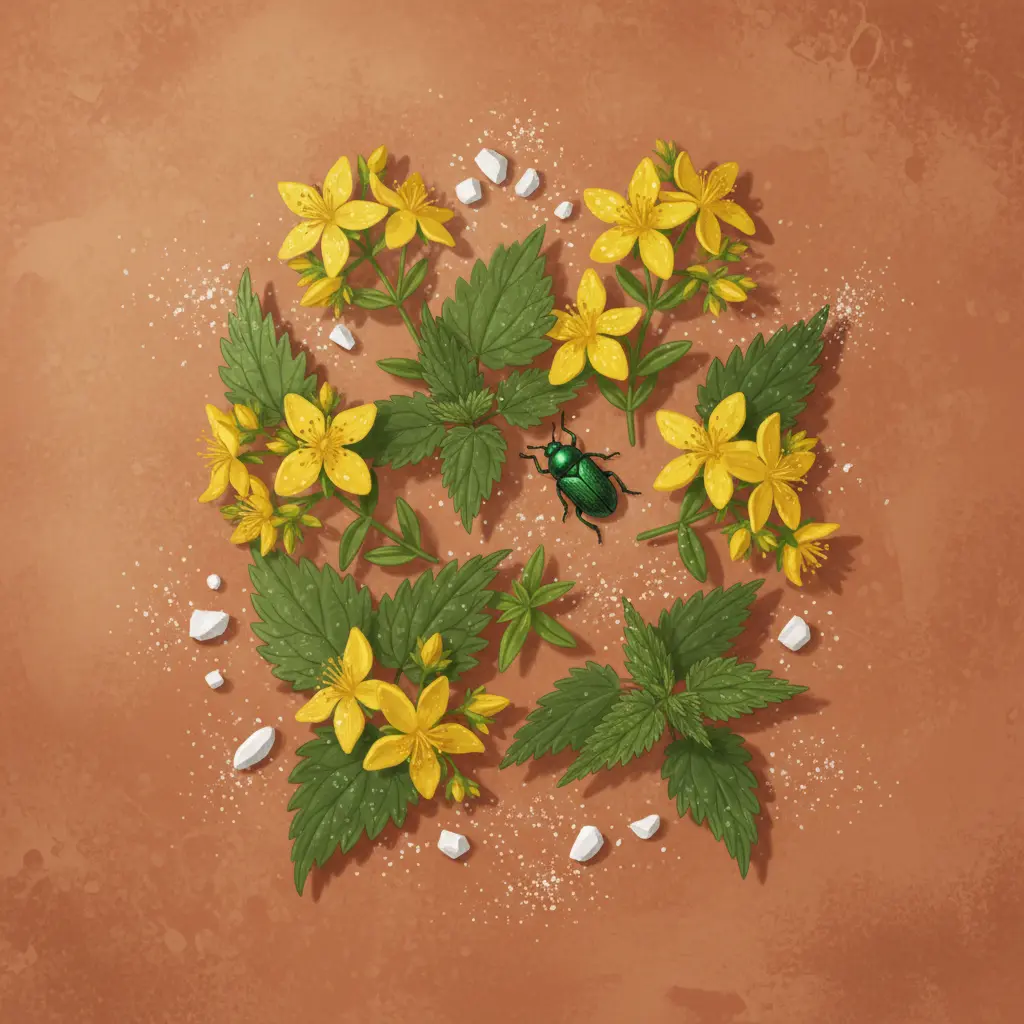
What Are the Best Homeopathic Remedies for Burns?
Burns arrive without preamble, and five remedies do most of the work in homeopathic first-aid for them: Cantharis, Urtica urens, Causticum, Arsenicum album, and Hypericum. Each meets a different self-expression of the organism at the moment of the burn: the raw vesicating scald, the shiny stinging weal, the old burn that will not close, the deep burn with prostration, and the burn to a nerve-rich fingertip. What follows names each remedy, its keynotes, and the potency register that matches the case.
Quick Answer
| Remedy | Register | Best when |
|---|---|---|
| Cantharis | 30C, 200C | Screaming raw pain, blister forming, brief relief from cold |
| Urtica urens | Ø tincture; low potencies; 30C by mouth | Sunburn, first-degree scald, shiny stinging skin |
| Causticum | 30C and above | Old burns that will not close, contractures, sequelae |
| Arsenicum album | 30C, 200C | Deep burn with anxious restlessness, midnight aggravation |
| Hypericum | 30C and above | Burn to a nerve-rich part: fingertip, nail bed, nerve trunk |
A word on register before names. What acts in a classical 30C or 200C prescription is the potentised dynamic preparation, chosen on the totality of the case and given by mouth; the pharmacology and safety data cited on several of these plants apply to the mother tincture (Ø) and the low decimals, where the dose is estimable in milligrams and the finding sits inside the herbal literature. Urtica urens Ø, five drops in a wineglass of water on gauze, is drainage-register work. Cantharis 30C dissolved in water and applied on gauze is topical use of a potentised preparation — what the elder writers meant by "a lotion of Cantharis 30." Confusing the two is the easiest technical error a home prescriber can make.
1. Cantharis: The Raw Scald
Best when: Pain screams before the blister forms, cold water gives brief relief, and the burn feels rawer than it looks.
The Cantharis picture fits the acute burn exactly: a scald or burn that feels raw and smarts, is eased by cold applications, and then grows more inflamed than it should — what the materia medica calls inflammations violently acute and rapidly destructive in the mucous and serous membranes. The picture is one of intensity out of proportion. A pastry chef reaches for the handle of a copper saucepan without a cloth and stands ten minutes at the sink shaking her hand under the tap, unable to answer questions, until three doses of Cantharis 200C at fifteen-minute intervals settle the pain and she can weep with relief. Vesicles rise fast. Where the burn takes the mouth, from a swallow of coffee still on the boil, there is burning in mouth, pharynx and throat with great difficulty when swallowing liquids. The mental register is unmistakable: anxious restlessness ending in rage, an inability to sit still with the pain, and in severe cases sudden loss of consciousness with a red face.
Give Cantharis internally in 30C or 200C, one dose repeated as pain returns. In lay hands, three doses at fifteen-minute intervals in the first hour usually suffice to break the shock and settle the vesication. The external dressing is a lotion of a few drops or pills of Cantharis 30C or 200C in an ounce of water, applied on gauze — a potentised preparation, not the mother tincture. Where the burn also touches the urinary tract, as with a steam burn to the perineum or a systemic response with scanty, scalding urine, the same remedy meets both fronts, since acute cystitis with cutting and burning is Cantharis's other signature.
2. Urtica urens: The Stinging Nettle Burn
Best when: A first-degree burn or a sunburn shines red, stings and itches, and rubbing seems to help before the skin blisters.
Urtica urens is named for what it does. The stinging nettle raises on the skin the very picture it treats. It is indicated, both as an external application and by mouth, for first-degree burns, for shiny sunburns that sting and burn, and for old burns that refuse to heal. The character of the sensation is unmistakable: hives raised in bright red blotches, formication under the skin, and the sense that the surface has been whipped. Where Cantharis is the deeper vesicant burn, Urtica is the burn confined to the epidermis. Modalities are precise. Worse from cool bathing, worse from touch, worse yearly at the same season where the burn is a photodermatosis, better lying quiet. Prickly heat and the burning of a child left too long at the beach both fall inside its picture.
For sunburn on a whole back, give Urtica urens tincture, five drops in a wineglass of warm water, dabbed on gauze, alongside 30C by mouth three or four times in the day. Burnett prescribed the tincture in this way — warm water, not cold, consistent with the remedy's aggravation from cool bathing. Urtica also antidotes Apis at the boundary of bee-sting reactions where the picture leans pale and swollen, and it is complementary to Calendula in the healing phase once the acute sting has settled.
3. Causticum: For Burns That Will Not Close
Best when: An old burn refuses to close, or a fresh burn is followed by contractures, keloid, and long-lasting soreness.
Causticum is Hahnemann's own preparation, and its burn indications are chronic before they are acute. Causations for the remedy include the after-effects of scalds and burns, of grief, fright, sorrow and worry, and of nights spent keeping watch. The chemistry is potassium hydrate distilled from slaked lime. The picture is one of caustic potash on living tissue and, more importantly, on the mind: an anxiety of conscience, an unbearable susceptibility to injustice, a slow paralytic weakness. Where a burn has passed the acute stage and left the skin thickened, the tendons drawn, or the scar itself the seat of a chronic pain, Causticum meets the sequel. Contracted tendons after a hand burn; a scar that pulls in cold dry air or clear fine weather; the child whose bedwetting begins after a scald; the palsy of an eyelid following a facial burn. Burning, rawness and soreness run through the remedy as its whole sensory signature.
Prescribe Causticum in 30C twice weekly for a persistent old burn, or a single 200C dose in the deeper picture. It is unlikely to be reached for at the moment of injury. It is the remedy for what follows: the burn that never healed, the pain that returns with dry cold winds, the sequela that a strong prescription at the moment could not entirely prevent. Causticum is better from damp wet weather and worse in dry cold air — a modality that guides both the physical prescription and the timing of aggravations. The mental register belongs to the case as much as the physical one; the patient who holds grudges after having been badly treated in the burn ward is already inside Causticum's picture.
4. Arsenicum album: The Deep Burn with Prostration
Best when: The burn is deep or extensive, the person is anxious and restless, prostrated out of proportion, and worse after midnight.
Arsenicum's burn register is systemic. Acute and chronic burns are among its clinical indications, and the pains drive the patient frantic — fiery, like hot wires or needles — yet are eased by warmth. That last modality separates Arsenicum from Cantharis: where Cantharis wants cold, Arsenicum wants warm applications. A burn covering an arm from a spilled deep-fryer in a person who has become grey, anxious, restlessly moving from bed to chair to bed, and worst between midnight and two in the morning, is Arsenicum until proven otherwise. The prostration is out of proportion to the injury. The fear is of dying, and of being alone with the burn.
Give Arsenicum album 30C or 200C every one to two hours in the acute phase and reduce as the person settles. In a deep or extensive burn the remedy accompanies competent surgical and burn-unit care. What it treats is the person carrying the injury: the anguish, the collapse, the midnight aggravation, the acrid discharge if the burn later suppurates. The materia medica preserves the older observation that Arsenicum in high potency gives quiet and ease at the last moments of life. That calming action is a matter of clinical record long before it is a matter of theory.
5. Hypericum: The Burn to a Nerve
Best when: The burn is to a nerve-rich part (fingertip, palm, sole, nail bed) or the pain shoots along a nerve trunk from the injured spot.
The Latin name of Hypericum carries its doctrine. The leaves are pierced with pellucid dots, a signature that led to the plant's use for wounds where the tissue is punctured or torn to the nerve. Its clinical indications include crushed fingers, above all the tips, injuries to the brain and spinal cord, pain in the tailbone after an injury, and neuralgia of the stump after amputation. A burn to a fingertip from a soldering iron; a burn under a nail from a hot wire; an electrical burn where the pain runs up the arm to the shoulder: each is Hypericum. Shooting pains from the injured part, tingling, burning and numbness, and the impression that the wound hurts more than its size warrants: this is the remedy's territory. It will also meet the burn where a nerve has been left exposed and the pain becomes intolerable at each dressing change.
Give Hypericum 30C every one to two hours in the acute phase, extending intervals as pain subsides. Where the burn is at the fingertip or under a nail, the remedy often reduces the throbbing within the first hour. Where a burn scar has become the seat of a neuralgia, as with an old palm burn shooting pain up the median nerve six months later, Hypericum in a higher potency at longer intervals often completes what Causticum began. Its acute companion at the moment of the burn is Cantharis; its later companion in the healing scar is Calendula.
How to Choose Between These Remedies
The picture decides. Where the injury is fresh, the surface intact or vesicating, and the pain sharp and raw, Cantharis leads. Where the skin is shiny, red and stinging without deep tissue loss (a sunburn, a first-degree scald, a heat rash pushed too far), Urtica urens is the closer match. Where the burn has passed its acute phase and left a scar that pulls, a tendon that shortens, a paralysis of an eyelid, or a bedwetting dating from the injury, the case has left Cantharis's territory and entered Causticum's.
Where the picture becomes systemic (burn of any size, anxious restlessness, midnight aggravation, thirst, and a prostration outsizing the injury), Arsenicum album leads. Where a burn has taken a nerve-rich part or produced shooting pains along a nerve trunk, Hypericum is the remedy.
Cantharis and Arsenicum album can both meet a deep burn, and the differential decides many cases at the bedside. Cantharis wants cold, rages, and cannot bear touch: the patient shakes the burnt hand under a running tap, snarls at anyone approaching, and settles only as the pain settles. Arsenicum wants warmth, clings, and quiets under a covering: the person asks not to be left alone, refuses ice, and the collapse and midnight aggravation carry more weight than the visible surface loss. Where the picture is cold-loving fury with a red face, Cantharis. Where it is warmth-loving anguish with a grey face and worst at one in the morning, Arsenicum. Thirst separates them too: Arsenicum sips small quantities often; Cantharis, in the acute rage, refuses to drink and complains of the sight of water even where the throat burns.
Frequently Asked Questions
What potency is right for a household burn?
For a fresh, small burn in an otherwise well person, 30C is the standard household potency for all five remedies. One dose at the moment of injury; a second at fifteen or twenty minutes if pain has not eased; a third if needed. 200C is used where the picture is more intense or systemic, most often for Cantharis and Arsenicum album. Higher potencies belong in a prescriber's hands. The potency glossary entry gives fuller background.
Can Urtica urens tincture be applied to a burn directly?
Diluted, yes. The tincture is a preparation of the fresh plant; a few drops in a wineglass of warm water, dabbed on gauze, is the traditional dressing for sunburn and first-degree scalds — warm rather than cool, consistent with the remedy's aggravation from cool bathing. Undiluted tincture on broken skin is unnecessarily harsh. Calendula tincture is often preferred once the acute sting has settled and healing has begun.
When does a burn need a hospital rather than a remedy?
A burn crossing a large area of skin, a burn from electricity or chemicals, a burn to the face or genitals, and any burn in a small child or an older person that looks deeper than superficial reddening: each needs urgent hospital assessment. Homeopathic remedies do not replace burn-unit care in these cases. They accompany it, meeting the shock, the pain, and the anxious restlessness while other work is done. The skin conditions hub carries related material.
How is the case evaluated when several remedies overlap?
The choice turns on the totality of what the person makes of the burn, not on the burn's grade alone. Two people with identical scalds can call for different remedies: one becomes anguished and restless from midnight onward (Arsenicum); the other rages at anyone who comes near the injury (Cantharis). The prescription follows the picture the organism presents.
Related Reading
- Materia medica: the source texts behind these keynotes
- Simillimum: the principle of matching remedy to case
References
- Boericke, W. Pocket Manual of Homoeopathic Materia Medica and Repertory. Ninth edition. Philadelphia: Boericke & Runyon, 1927. (Cantharis burns and scalds; Urtica urens; Causticum; Arsenicum album; Hypericum.)
- Clarke, J. H. A Dictionary of Practical Materia Medica. London: Homeopathic Publishing Co., 1900. (Cantharis; Causticum; Urtica urens under Burnett.)
- Hahnemann, S. Organon of Medicine. Sixth edition. Translated by W. Boericke.
- Burnett, J. C. Diseases of the Spleen and their Remedies Clinically Illustrated. London: Homeopathic Publishing Company, 1887. (Urtica urens, fever and gout action.)