What Are the Best Homeopathic Remedies for Headaches?
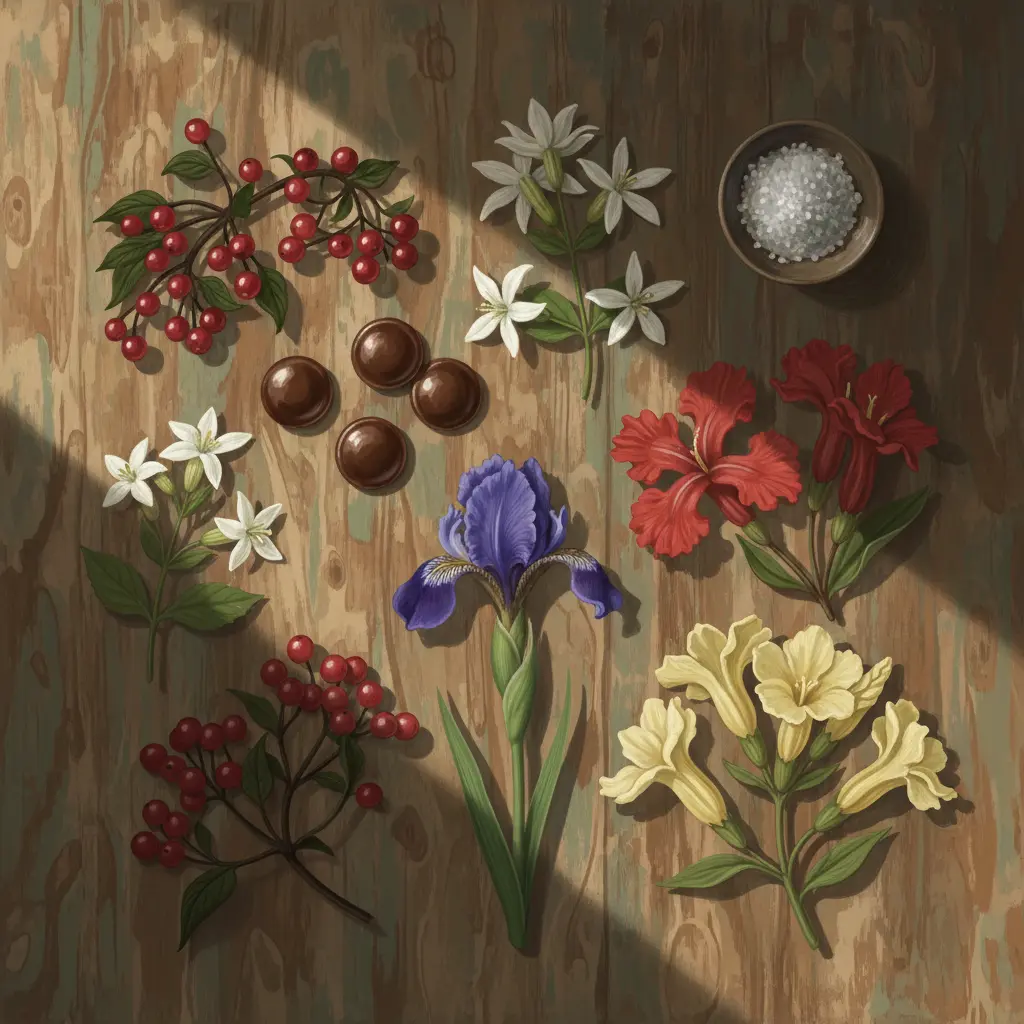
The best homeopathic remedies for headaches include Belladonna (sudden throbbing right-sided pain, flushed face), Bryonia (splitting pain worse from any motion), Nux Vomica (morning headache from overindulgence or stimulant withdrawal), Natrum Muriaticum (hammering pain sunrise to sunset, after grief), Sanguinaria (right-sided pain rising from neck over the eye), Gelsemium (dull heavy occipital pressure with drooping eyelids), and Iris Versicolor (periodic migraine with bilious vomiting and visual aura). Each is matched to a symptom pattern — the headache type alone is never enough to choose. This guide covers when to use each remedy, how to differentiate between them, and when professional care becomes essential.
Quick Answer
| Remedy | Best when… |
|---|---|
| Belladonna | Sudden throbbing right-sided headache, flushed face, dilated pupils, worse light, noise, or jar |
| Bryonia | Splitting headache worse from slightest motion — even moving the eyes — must lie perfectly still; very thirsty |
| Nux Vomica | Morning headache after alcohol, coffee excess, or missed coffee; irritable and constipated |
| Natrum Muriaticum | Hammering pain from sunrise to sunset, worse 10–11 AM, from grief or emotional suppression |
| Sanguinaria | Right-sided headache climbing from neck over the right eye; periodic; worse light and noise |
| Gelsemium | Dull heavy occipital headache with droopy eyelids, no thirst, weakness, relieved by profuse urination |
| Iris Versicolor | Periodic migraine with blurred vision aura, followed by nausea and vomiting of bile |
1. Belladonna — The Sudden Throbbing Headache
Best when: the headache comes on fast, pounds violently, with flushed face, dilated pupils, and extreme sensitivity to light, noise, or the slightest jar.
Belladonna produces violent vascular congestion. Murphy's materia medica describes the pain as "stabbing from one temple to the other." Right-sided. The face is flushed and shiny, the eyes brilliant. No thirst despite the heat. A raised voice, even footsteps nearby — any stimulus makes the pain unbearable. Often associated with fever, suddenly-dried sinus congestion, or exposure to cold air and sunlight.
30C repeated hourly usually suffices; 200C when pain is very severe or has persisted several hours.
Worse: light, noise, jarring, lying down, afternoon, motion Better: pressure, semi-erect posture, dark and quiet room
Quick reference: Sudden right-sided throbbing headache, red flushed face, dilated pupils, worse light and jar. Think of it as "the head about to explode, but only just started."
2. Bryonia — The Stone-Still Headache
Best when: the pain is a splitting, bursting pressure dramatically worse from any movement — including moving the eyes — and the only relief comes from lying completely still.
Bryonia headaches build slowly. Murphy notes pain "over left eye, pressive, going to occiput, then spreading over the whole head" — bursting, as if struck by a hammer from within. Extremely thirsty for large quantities of cold water, lips dry and cracked. The patient lies on the painful side pressed against the pillow, because stillness is the only relief. Headaches from constipation or suppressed colds also fit when this stillness picture is present.
30C every two to three hours in acute headaches; 200C as a single dose when the picture is clear and severe.
Worse: any motion (even of the eyes), stooping, coughing, morning, warm rooms Better: lying on painful side, firm pressure, cold applications, perfect rest
Quick reference: Splitting left-sided or spreading headache, every movement unbearable, dry lips, great thirst, must lie completely still.
3. Nux Vomica — The Overindulgence Headache
Best when: the headache comes in the morning after alcohol, rich food, excessive coffee, or — critically — when someone who drinks coffee daily has missed their usual cup; the person is irritable, hypersensitive to noise and light, and constipated.
Murphy describes these as "toxic headaches from drugs, alcohol" and "hangover headaches with irritability." The frontal or occipital pain has a nail-driven-in sensation. The patient is worse for any sensory stimulus and wants to be left alone. Constipation is almost always present — the urge is there but nothing comes. What distinguishes Nux from Belladonna is the lack of violent flushing and the clear causal link to stimulants or overwork. A person who habitually drinks two cups of coffee and skipped both yesterday will have this headache by morning.
30C once or twice covers most acute presentations.
Worse: morning, noise, light, coffee, alcohol, overwork, cold air, uncovering Better: rest, after uninterrupted sleep, warmth, firm wrapping of the head
Quick reference: Morning headache after excess or missed stimulants; irritable, oversensitive, constipated. The "next-day head."
4. Natrum Muriaticum — The All-Day Grief Headache
Best when: the headache begins at sunrise and worsens through the day, peaks between 10 and 11 AM, and has an emotional backstory — grief, disappointment, suppressed tears.
Murphy is precise: "aches as if a thousand little hammers were knocking on the brain, throbs." Long, grinding, cyclic — worse from sunlight, emotional stimulation, moving the eyes. The 10–11 AM aggravation is characteristic. Photophobia is pronounced. The patient craves salt, avoids company, and is made worse by consolation. There is almost always a history of loss or suppressed emotion preceding the headache pattern.
30C two to three times may ease an acute attack; lasting improvement requires constitutional prescribing.
Worse: sunlight, 10–11 AM, emotional upset, noise, consolation, reading Better: sleep, lying still with head elevated, pressure on eyes, cool room
Quick reference: All-day hammering headache worst 10–11 AM, worse sunlight and grief, better sleep and darkness. The suppressed-grief headache.
5. Sanguinaria — The Right-Sided Periodical Headache
Best when: a pain that climbs from the back of the neck up and over the right side of the head, settles over or behind the right eye, follows a periodic pattern (weekly, monthly), and is intensely photophobic and phonophobic.
Sanguinaria is a specific remedy for this trajectory: occiput to right eye, periodically, with nausea worsening through the day and some relief after sleep or vomiting. A clear weekly or monthly pattern strongly suggests it. The remedy covers both tension and migraine presentations when the right-sided laterality and ascending trajectory are both present; it is particularly noted for hormonal headaches that follow this track.
30C at the onset; some practitioners use 200C prophylactically the day before the expected attack.
Worse: light, noise, motion, lying on left side, odors Better: sleep, vomiting, lying down in dark room, evening
Quick reference: Right-sided headache from neck up over the eye, periodic, photophobic, relieved by sleep. Sanguinaria's trajectory is its signature.
6. Gelsemium — The Heavy Droopy Headache
Best when: dull heavy pressure in the back of the head, droopy eyelids, muscle weakness, and relief after profuse urination.
Gelsemium produces "sensation as if a band around the head with occipital headache" and "dull heavy ache with heaviness of eyelids." Not a throbbing headache — a heavy fog. The person moves slowly, cannot easily open their eyes, has no thirst. The urination-amelioration is diagnostically specific: after a large urination, the headache lightens noticeably. These headaches often follow emotional shocks, bad news, anticipatory anxiety, or influenza.
30C two to three times in acute presentations; 200C as a single dose in severe cases with the full dull-droopy picture.
Worse: emotions, bad news, anticipation, damp weather, motion, heat of sun Better: profuse urination, open air, lying with head elevated, alcoholic stimulants
Quick reference: Dull heavy occipital headache, droopy eyelids, no thirst, weakness — and clearly better after profuse urination. The "heavy fog" headache.
7. Iris Versicolor — The Bilious Migraine
Best when: a periodic migraine is preceded by blurred or dim vision as an aura, followed by intense nausea and vomiting of bile or very sour material, and the pattern repeats at regular intervals.
Iris Versicolor covers the full migraine triad of visual disturbance → headache → vomiting, with the vomiting specifically bilious. These headaches come on a predictable schedule — every Sunday, every fortnight — and the patient learns to recognize the blurred vision as the warning. Vomiting brings partial relief. A smaller remedy in breadth than Sanguinaria or Natrum Muriaticum, but when the bilious-periodic-aura picture is exact, it works with precision.
30C at the first sign of aura; 200C as a single dose at the start of the expected cycle.
Worse: rest, periodically (weekly or fortnightly), at regular intervals Better: motion, continued movement (often opposite to Bryonia), vomiting
Quick reference: Periodic migraine with blurred-vision aura and bilious vomiting at predictable intervals. The organism is trying to rid itself of something — the remedy supports that process.
How to Choose Between These Remedies
The key differentiators:
- If the headache comes on suddenly with violent throbbing and a red face → consider Belladonna over all others
- If any movement, including eye movement, makes the pain significantly worse → consider Bryonia first, especially with dry lips and great thirst
- If there is a clear trigger (alcohol, missed coffee, rich food) and the person is irritable and constipated → Nux Vomica is almost always right
- If the headache lasts all day from sunrise to sunset and worse 10–11 AM → Natrum Muriaticum, particularly if there is grief or emotional suppression in the history
- If the pain climbs from the right side of the neck to the right eye on a predictable schedule → Sanguinaria
- If the headache is dull, heavy, occipital, with drooping eyelids and no thirst → Gelsemium, especially if the pain visibly improves after urination
- If a visual aura precedes each headache and vomiting of bile follows → Iris Versicolor
Modality is more decisive than location. Two people with left-sided headaches may need different remedies — one because pain is worse from motion (Bryonia), another because it follows grief and peaks late morning (Natrum Muriaticum). Location narrows the field; modality decides it.
Frequently Asked Questions
How quickly do homeopathic remedies for headaches work?
In acute, well-matched cases — the sudden Belladonna headache, the Nux Vomica morning hangover — relief often begins within 30 to 60 minutes. Bryonia and Gelsemium may respond over one to two hours. Chronic recurrent headaches (Natrum Muriaticum's all-day pattern, Sanguinaria's weekly cycle) require constitutional treatment over weeks to months rather than acute dosing.
Can I combine multiple homeopathic remedies for headaches?
Classical homeopathic practice prescribes one remedy at a time. Two simultaneous remedies make it impossible to know which acted. When the picture is clear — and with headaches it usually is — a single well-chosen remedy produces cleaner results. If the first remedy does not act, the symptom picture is reassessed and a second considered.
What potency should I use for headaches?
30C is the standard starting point for acute self-prescribing. Repeat every one to two hours while symptoms match; stop as soon as improvement begins. 200C as a single dose when the headache is severe and the picture is unambiguous. LM potencies and higher belong with a practitioner, particularly for recurrent or chronic patterns.
When should I see a homeopathic practitioner for headaches?
Any recurrent pattern — weekly cycles, menstrual headaches, chronic daily headaches — benefits from constitutional prescribing rather than acute remedy selection. A practitioner takes the full case: emotional context, time modalities, sleep, what preceded the first episode. The question is not "which remedy for today's headache" but "what does this organism's self-governing principle need to stop generating these headaches?" That requires a full case.
Are these remedies safe for children and pregnant women?
Properly potentized homeopathic remedies do not carry the pharmacological risks of crude substances. Children and pregnant women are frequently treated with homeopathy, and Belladonna, Bryonia, and Gelsemium are routinely used in these populations. Any headache in pregnancy that is severe, sudden, or accompanied by visual changes warrants prompt medical evaluation — a clinical threshold independent of the remedy choice.
What distinguishes these headache remedies from the migraine-specific ones?
Several of these remedies — Belladonna, Natrum Muriaticum, Nux Vomica, Sanguinaria, Iris Versicolor — also appear in the migraine guide. The difference is emphasis: that guide selects remedies for the classical migraine pattern; this one covers the full headache landscape including tension, sinus, cluster, and hormonal types. Gelsemium and Bryonia are more characteristic of tension and post-flu headaches than of classic migraine.
When to Seek Professional Care
Recurrent headaches — weekly, monthly, or hormonal cycles — deserve a full homeopathic case rather than repeated acute prescribing. Constitutional prescribing reaches the level where the pattern itself resolves.
Certain presentations always warrant conventional evaluation first: the thunderclap headache, headache following head trauma, headache with fever and neck stiffness, and any new severe headache in someone over 50. For sinusitis-related headaches, anxiety-driven tension patterns, or vertigo accompanying headache, the linked condition pages address the broader clinical picture.
Related Reading
- Migraine and Homeopathy
- Homeopathic Remedies for Vertigo
- Homeopathic Remedies for Anxiety
- Homeopathic Remedies for Sinusitis
- Belladonna — Remedy Profile
- Gelsemium — Remedy Profile
References
- Boericke, W. Pocket Manual of Homoeopathic Materia Medica. 9th ed. B. Jain Publishers, 2002.
- Kent, J.T. Lectures on Homoeopathic Materia Medica. B. Jain Publishers, 2006.
- Clarke, J.H. A Dictionary of Practical Materia Medica. B. Jain Publishers, 2005.
- Murphy, R. Nature's Materia Medica. 3rd ed. Lotus Health Institute, 2006.