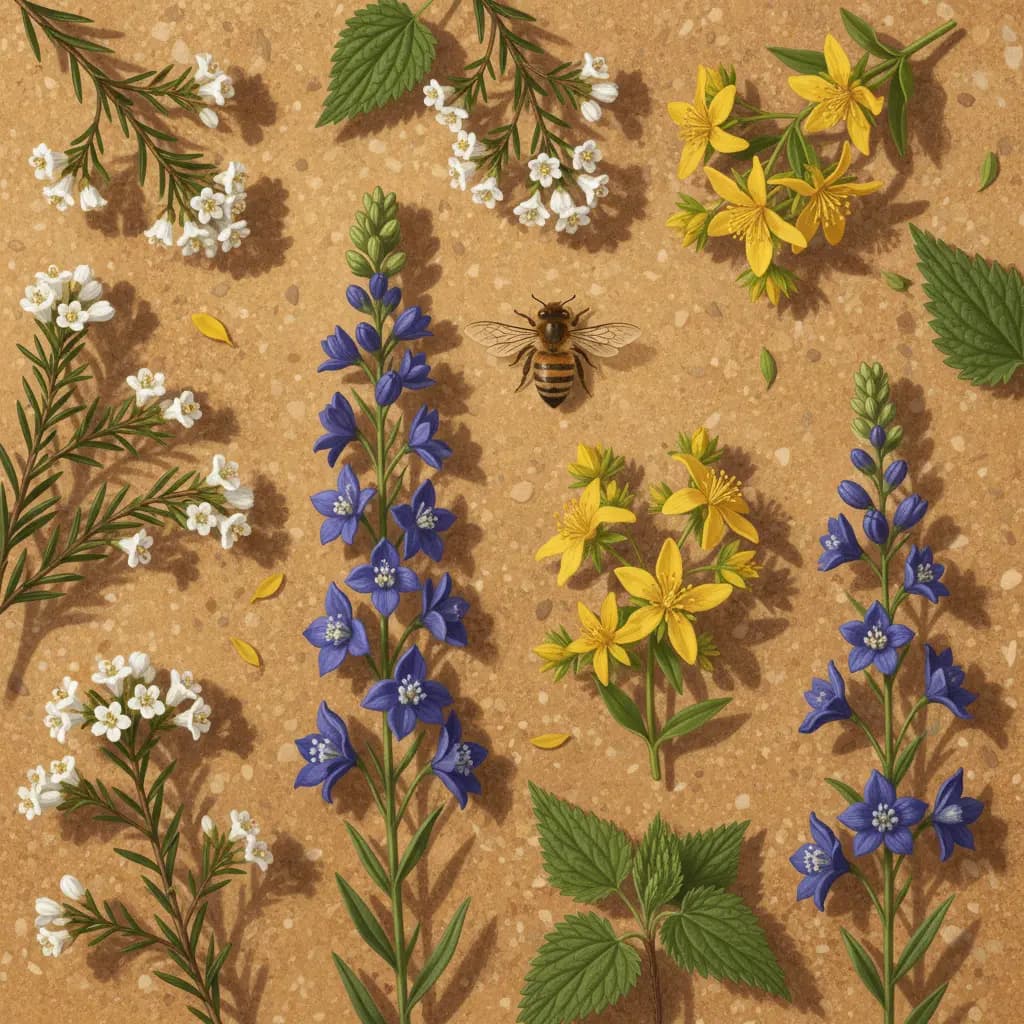
What Are the Best Homeopathic Remedies for Insect Bites?
Insect bites test the acute prescriber more often than almost any other complaint, and the field narrows to five remedies that carry the work: Ledum for the puncture, Apis for the sting, Staphysagria for the lingering itch, Hypericum for the nerve-rich site, and Urtica urens for the raised, burning weal. Each meets a distinct picture. The differential turns on what the wound looks like, on what the reaction feels like, and on who the person struck happens to be.
Quick Answer
- Ledum — puncture wound; site cold to the touch; mosquito, tick, wasp; the person is better for cold applications
- Apis — rapid rosy edema with stinging, burning pain; thirstless; worse from any heat, better from a cold flannel
- Staphysagria — the bite outlives the event; the itch shifts as it is scratched; the patient is quiet, held-back, sensitive
- Hypericum — bite over nerve-rich tissue; shooting pain along the nerve into the trunk; fingertip, tailbone, palate
- Urtica urens — raised red weals; hives that spread; the whole skin turns dermographic
1. Ledum — The Puncture
Best when: the bite is a small, clean puncture from a mosquito, tick or wasp and the tissue around it feels unaccountably cold.
Ledum sits in Teste's Arnica group and specialises in a register the others leave alone. The parts around the bite go purple, then puffy, then thin. The wound itself is cold. The person is better for cold. A bite that throbs when heated by the bedcovers and quietens under a cold pack is Ledum until proven otherwise. Mosquito bites, tick bites carrying the early prodrome of Lyme, stings where the local reaction is dark rather than rosy, and needle pricks in nursing and dentistry all fall to it. Wesselhoeft's report of an aborted felon, in which a needle prick left the tip of the index finger red, swollen and throbbing, is preserved in the older literature and still teaches the picture. The gardener who felt no pain from the rose thorn until the finger began to throb three days later, the skin around the puncture cold and dark to the touch, settles within the day on Ledum 200C.
Give 30C every one to two hours in the acute; 200C where the site is already dark and ecchymotic, or where the picture reaches into rheumatic pains that ascend from the feet. In tick country, one dose of 200C the evening of a known exposure is the traditional homeopathic prophylactic; the same policy applies after a puncture that raises the shadow of tetanus, with Hypericum taking the case should twitching actually appear.
2. Apis — The Sting
Best when: the site swells rosy, hot and translucent within minutes; a burning, stinging pain radiates; touch and heat are intolerable.
Apis is the specific of the allergic sting. A wasp catches the back of the hand and the hand puffs up to a glove of watery edema; the eyelids close from a mosquito bite over the brow; a bee catches the lip and the whole side of the face swells to a pale bag of fluid. The pain is not throbbing but stinging, the sudden shrill signature that runs through the whole Apis picture, read here on the skin. Thirstlessness in a flushed, restless person confirms it; so does aggravation from any warmth, and relief from a cold flannel pressed hard against the site.
In August, a beekeeper handling a stressed hive who arrives with the forearm swollen to the elbow, red, hot, translucent, will lift on Apis 30C given every fifteen minutes for an hour. Where the reaction crosses into anaphylaxis, with the throat closing, hives spreading up the trunk, and the person greying, the practitioner does not weigh remedy against adrenaline. Adrenaline runs first. Apis follows and continues the work as the acute settles. In the ordinary sting 30C repeated every fifteen minutes until the swelling recedes is the working prescription; for the person who has been stung many times before and now over-reacts to every mosquito, one dose of 200C often lifts the tendency for the season.
3. Staphysagria — The Bite That Outlives the Event
Best when: the bite itself was slight, but the site itches maddeningly for days; the person is quiet, sensitive, and cannot stop scratching.
Staphysagria is the remedy for the mark that outlives the event. The bite of a horsefly or a midge that a robust patient would forget by nightfall becomes, in a Staphysagria constitution, a red pillar that itches for a week and moves the moment it is scratched. Lice bites in a schoolchild who has already had the shame of being sent home; flea bites in a caretaker who never lets herself say she is angry; a scabies-like itch after a walk in long grass — the sphere is that of complaints brought on by vexation, punishment, shame and anger held in, in a person morbidly sensitive to the least word that seems wrong. The itching is aggravated by the slightest touch on the affected part and by unspoken indignation, and a fresh reaction appears every time the patient scratches, relief shifting to a new site and never quite arriving.
Give 30C two or three times daily until the itch settles; 200C where the reaction is disproportionate to the bite and the temperament fits. The remedy also covers the aftermath of stitches or a punch biopsy in a person the surgeon has left irritated but silent, and it is the same picture met by the same medicine.
4. Hypericum — The Nerve-Rich Bite
Best when: the bite lands on a fingertip, a toe, the palate, the coccyx or the scalp; the pain shoots along the nerve toward the trunk.
Hypericum is the remedy of the injured nerve. The guiding sensation is a sharp pain that runs along the course of the nerve toward the trunk. A wasp caught under a fingernail; an ant that has bitten inside the mouth and left the palate shooting into the ear; a horsefly on the tailbone; the tick pulled from behind the ear that leaves a pain shooting into the jaw. These are Hypericum pictures rather than Apis pictures, and the practitioner who does not distinguish them loses time and repute. Clarke's clinical rubrics include punctures, bites of animals and insects, and gunshot wounds; the leaves of the plant, held to the light, show the pellucid dots that gave the signature followed for two centuries.
Give 30C or 200C after the bite where the pain is shooting or the location is nerve-rich. Where a puncture threatens tetanus, with the twitching muscles near a wound that Ledum's picture describes, Hypericum in 200C is the traditional cover, alongside ordinary surgical care. The same rule applies to dental work and to spinal punctures.
5. Urtica urens — The Weal and the Hive
Best when: the reaction is a raised red burning weal, or the person reacts to every bite with hives and the whole skin turns dermographic.
Urtica urens is the remedy of the raised, itching, stinging weal. Burnett rediscovered it when a woman with intractable ague was cured by drinking nettle tea on her herbalist's advice; his subsequent clinical papers turned it into one of the few remedies where the herbal and the classical registers both remain in constant use.
The herbal register uses tincture (Ø) or 1x, five drops in a wineglass of warm water, applied locally to a first-degree burn or nettle sting. This was Burnett's own indication. Dosimetric, pharmacologically active, subject to the ordinary cautions of any active plant. The classical register uses 30C or 200C by mouth for hives after shellfish, for angio-neurotic edema, and for the allergic vaginitis and urticaria nodosa Clarke describes. It carries no molecular content of the alkaloid. Same Latin name, two prescriptions, two different bodies of evidence. What acts in the potentised form is the dynamic preparation, prescribed on the picture and meeting the self-governing principle that produces the reaction. The absence of molecules explains why crude toxicity does not apply in that register; it is never itself the explanation of how the remedy meets the case.
For a bee sting on which the whole limb goes red, weals inside weals, and itches unbearably, 30C every fifteen to thirty minutes is standard. For the patient who has developed a summer-long tendency to hives after mosquitoes, one dose of 200C often ends the tendency. Tincture applied locally is Burnett's own prescription for the first sting of the season, and it belongs to the register in which pharmacology still speaks.
How to Choose Between These Remedies
A clean cold puncture with a dark halo asks for Ledum. A hot rosy edema that appears in minutes and eases under a cold cloth is Apis. Staphysagria meets the maddening itch that outlives the event and torments a quiet, held-back patient. A shooting pain along the course of a nerve, on a fingertip, a tailbone, or inside the mouth, is Hypericum. The raised burning weal that spreads across the skin, or the patient who has become dermographic after successive stings, asks for Urtica urens. Where two pictures overlap, temperament decides.
Timing matters. The remedy given in the first twenty minutes almost always requires fewer repetitions than the same remedy given the next morning. A 30C repeated as swelling rises, then spaced out as it recedes, is the ordinary rhythm; a single 200C is reserved for a picture already established, or for a constitutional tendency that keeps replaying the same acute. Where the picture crosses into anaphylaxis, adrenaline runs first and the remedy follows.
None of the safety data attached to any of these plants at Ø or low decimals applies to the 30C or 200C prescription. Urtica tincture applied to broken skin can raise a rash of its own; 30C cannot, because no alkaloid remains. The distinction has practical weight. It is the reason the same Latin name appears in two different bodies of literature, and citations from either only speak to the register in which they were measured.
Frequently Asked Questions
How quickly should a remedy act on a bite?
Within minutes for Apis on a fresh sting, within an hour for Ledum on a puncture, within a day for Staphysagria on an established itch. If a well-chosen 30C has produced no shift after three closely spaced doses, the picture is wrong; change the remedy rather than the potency. Burning and stinging that ease under a cold flannel are the clearest confirmations for Apis; a cold-to-touch site that eases under a cold pack is the confirmation for Ledum.
Is Ledum a substitute for tick prophylaxis?
It is not. Ledum 200C given the evening of a known tick exposure is the traditional homeopathic prophylactic, and sits alongside careful removal of the tick, inspection of the site, and the ordinary surveillance for erythema migrans in the weeks that follow. Where the ring appears or systemic symptoms develop, the case has moved beyond a first-aid article.
Can Urtica tincture be applied directly to the skin?
Burnett's own practice used Urtica tincture, five drops in warm water, both internally and topically for first-degree burns and for the sting-in-kind. This is the herbal register: patch test on broken skin, keep clear of the eyes, avoid open wounds. The 30C and higher, taken by mouth, carry none of these cautions and none of the topical activity. A different prescription for a different purpose, sharing only a Latin name.
What about a patient who carries an EpiPen?
The prescriber does not choose between adrenaline and the remedy in a serious sting. Adrenaline runs first; Apis or Urtica follows and continues the work as the acute settles. A patient prescribed self-injectable adrenaline for wasp or bee allergy should not be talked out of carrying it, and the remedy sits inside that arrangement.
Related Reading
References
- Clarke, J. H. A Dictionary of Practical Materia Medica. London: Homoeopathic Publishing Company. Entries for Ledum palustre, Apis mellifica, Staphysagria, Hypericum perforatum and Urtica urens.
- Teste, A. The Homoeopathic Materia Medica, Arranged Systematically and Practically. Notes on Ledum palustre and its use in punctured wounds and animal bites.
- Wesselhoeft, C. Clinical observation on Ledum palustre in whitlow following needle prick, preserved in the older materia medica literature.
- Burnett, J. C. Clinical papers on Urtica urens, including its rediscovery through the treatment of intermittent fever and its later use in gout, urticaria and burns.