What Are the Best Homeopathic Remedies for Premature Greying?
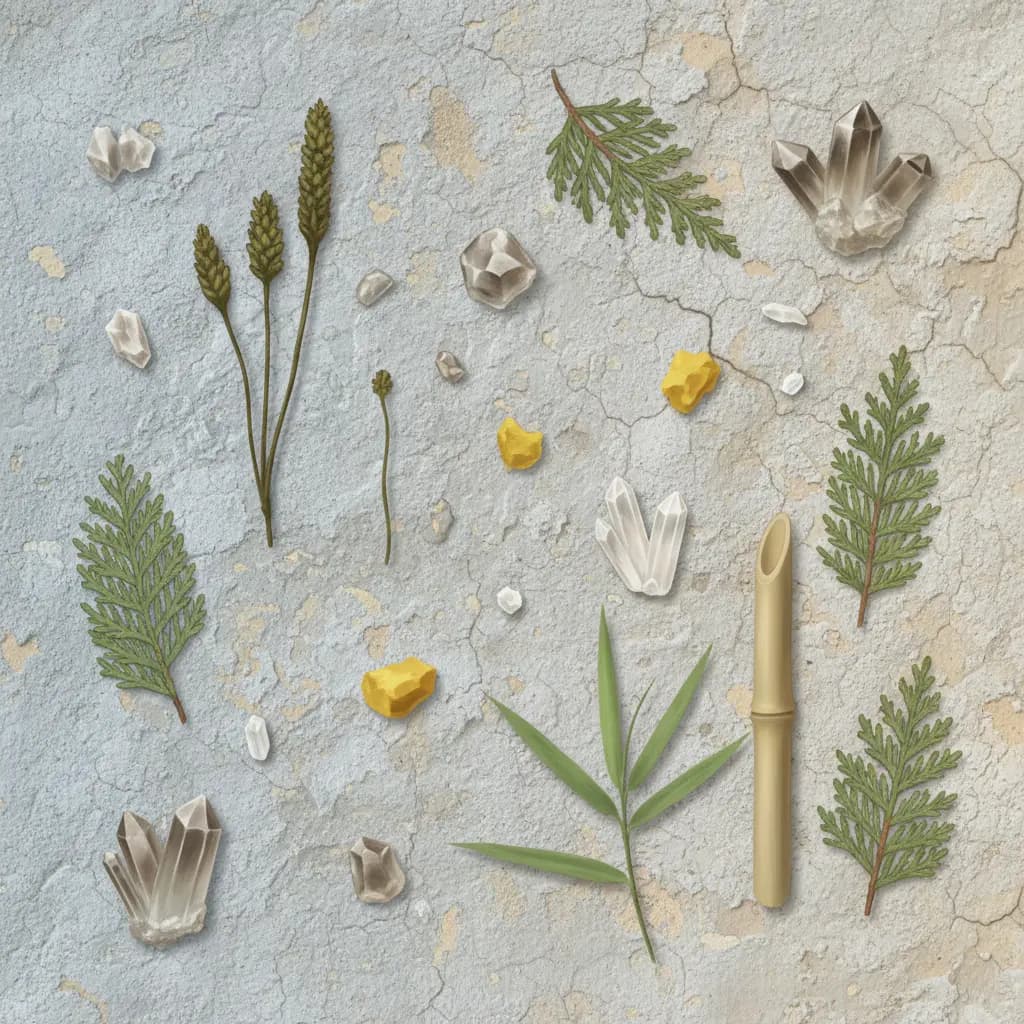
Premature greying answers to constitutional prescribing rather than to a topical application or a single-nutrient supplement. The six remedies most often indicated in practice are Lycopodium clavatum, Thuja occidentalis, Silicea terra, Sulphur, Bambusa arundinacea and Camphora officinalis. Each answers a distinct terrain: pre-senile digestive weakness, sycotic suppression after vaccination or gonorrhea, demineralization, deep antipsoric relapse, post-partum overwhelm, and shock-driven collapse. Case selection rests on the totality of symptoms, not on the pigment. Where the case is well answered, the general returns to health first and the colour follows late.
Quick Answer
Lycopodium clavatum — right-sided, 4pm bloating, looks older than his years, loss of self-confidence covered by hauteur.
Thuja occidentalis — never well since vaccination, warts and moles, feels ugly or unclean, discharges smell of herring brine.
Silicea terra — demineralized frame, splitting nails, suppressed foot sweat, yielding disposition, want of vital heat.
Sulphur — chronic relapsing case, burning soles at night, red orifices, ragged philosopher, suppressed skin history.
Bambusa arundinacea — greying and hair fall in the overwhelmed new mother; anxiety about money; sacroiliac pain; wakes 3:30 to 4:30 with an overactive mind.
Camphora officinalis — sudden greying after severe shock or operation; icy coldness with refusal to be covered.
1. Lycopodium clavatum — The Pre-Senile Constitution
A right-handed carpenter of forty-six, greying evenly at both temples since his thirty-second year, came in on a late September afternoon. His chief complaint was the 4pm bloating that would not let him finish the shift, sour belching between mouthfuls, and a face that his own daughter said had aged a decade in three years. Halfway through the intake he mentioned, almost by the way, that he had turned down a foreman's promotion three times: the thought of the daily briefing made him nauseated, though he coached his own five-man crew every morning at seven without difficulty. Voice at ease in the small circle, silence in the larger one — that contradiction, more than any physical, decided the prescription.
The rest of the terrain filled in around it: thin, withered frame, right-sided, red sand in the urine, backache in the kidney region worse before urination; wakes irritable, angry and sad; craves warmth and hates cold drinks; aversion to bread and fermented foods, hurried when eating. Lycopodium heads the pre-senility rubric, paired with cachexia, malnutrition due to weakness of digestion, and the mental note that he looks older than he is. The greying is not a hair phenomenon in itself; it is assimilation quietly failing for years, finally expressing itself at the scalp.
Prescribe 30C or 200C, one dose, and wait. The first sign of the remedy taking hold is usually digestive — quieter belching, steady appetite at breakfast, stools regular — well before any change at the root of the hair. If the digestion settles and self-confidence returns while pigment lags, the prescription is doing its work; hold, do not repeat until the case relapses.
2. Thuja occidentalis — Greying After Vaccination or Suppressed Sycosis
Worse from moonlight, worse from onions, worse from cold damp evenings, left-sided and chilly — the Thuja modality is the tell of the case long before the history is out. Thuja is Hahnemann's anti-sycotic. The picture belongs to greying that dates from a vaccination course, a treated gonorrhea, or a period of hidden shame; hair may fall in patches; skin bears warts, moles or condylomata.
Its clinical indications include hair disorders alongside rapid exhaustion and emaciation, and vaccinosis — never well since vaccination. Body feels thin and delicate, flesh as if beaten off the bones. Discharges foul, sweetish, of the herring-brine odour. The mental picture is unmistakable when it appears: feels isolated and different, thinks she is ugly or unclean, believes his blood is dirty or poisoned; secretive, full of hidden plans. Warts, moles and polyps on the skin will point the case here well before the patient volunteers the vaccination history.
Prescribe 30C or 200C, single dose, repeated only at long intervals. Watch the skin as much as the hair — warts flattening, sweat losing its rancid note, the private feeling of contamination easing. Where the sycotic ground has been repeatedly suppressed by antibiotics or steroid ointment, Thuja often needs to precede any deeper polychrest for the case to open at all.
3. Silicea terra — Demineralization at the Root
Where Thuja consolidates around a hidden sycotic ground, Silica cannot consolidate at all. The frame has never assimilated its food well; nails split; hair is brittle; foot sweat was suppressed years ago with talc or aluminium salts, and something in the general has not been right since.
A lack of grit, physical and moral alike, sums up both the mineral defect and the yielding disposition. Emaciation. Arrested development. Every injury festers. Cold hands and feet; vital heat is lacking even during exercise. The Silica adult is drained by public speaking or a crowded room and monitors his energy carefully; the Silica child arrives on the mother's arm, pale, with a large forehead and a distended belly, and screams at the sight of pins. Homesickness. Fear of sharp objects. The hair greys because the substrate does not consolidate; nails split and pit for the same reason.
LM1 or LM2 on ascending drops is often preferable to 200C for the truly demineralized patient, who cannot bear the concussion of the higher potency at frequent intervals. Two cautions apply. Silica can liberate the disease from old scar tissue in tuberculous constitutions, so it is used with care where old infection is walled off. And where unresolved abscess or chronic sinus is active, one begins low and observes rather than pushing the potency.
4. Sulphur — The Deep Reabsorbent
Hair and skin dry and unhealthy; lips and face very red, flushing at almost nothing; burning soles at night kicked out from under the sheet; a voracious appetite with emaciation; the 11am faint spell that stops the morning cold. This is the presenting Sulphur — and by the time it appears, the case has usually already run through two or three carefully chosen remedies that stopped acting.
Sulphur is a major antipsoric. It is often needed after acute illnesses that never fully clear up, and when remedies chosen with care do not act. That last is a Sulphur rubric before it is anything else. Mentally the range runs from philosophical mania to megalomania to the hoarded junk "he thinks beautiful." Aversion to being washed; body offensive in spite of washing. The Sulphur patient greys because his skin has been suppressed for years, and the reaction of the self-governing principle now speaks upward through the scalp. External use in baths and ointments can suppress and drive symptoms inward — attend to that history before prescribing.
A single 200C or 1M, then wait weeks. Sulphur is deep and slow; a second dose given inside four to six weeks often undoes the first.
5. Bambusa arundinacea — Greying in the Overwhelmed New Mother
Best when: hair greys or falls after childbirth, or after a stretch of caregiving that has emptied the patient; stiffness runs through neck, low back and sacroiliac; anxiety centres on money and the future.
Bambusa is a modern remedy, known from its provings and case reports. The keynotes are unmistakable when they appear together: the feeling of being unable to handle things anymore, overwhelmed by stress; depression after childbirth, together with sciatica, back pain or a stiff neck; moods worse toward 4pm; wakes 3:30 to 4:30 with an overactive mind; sweat that smells of fresh coffee; bites the nails. Bernd Schuster records the case of Lisa, a thirty-five-year-old first-time mother who wept while nursing and said her mood matched the day her own mother had died. She felt persecuted by her crying baby and lay in bed all day. After Bambusa the emptiness lifted; she became able to accept help and to let friends know how she truly felt. Where a woman's hair greys visibly across the second post-partum year, still living inside a Lisa-picture, Bambusa deserves the case.
30C or 200C, repeated only on plateau. Confirm the modality before committing to a course: pains eased by heat, hot drinks and rest; aggravated by cold and damp, and on first waking in the morning.
6. Camphora officinalis — Sudden Greying After Shock
Sudden sinking of strength. Icy coldness of the whole body. Pulse small and weak. The paradoxical refusal to be covered though the body is cold. This is Camphora in collapse — and where a patient's hair silvers rapidly across the months following a defined shock, and the terrain has not recovered its baseline warmth, Camphora is what may open the case for a subsequent polychrest.
Face haggard, anxious, bluish; old-looking skin. Fear of being alone, attacks of anguish at night, and the strange modality that most pains are better while thinking of them and worse from inattention. Camphor is the great antidote (with Coffea) to the vegetable remedies and corrects spoiled cases. The trigger is a defined event — an operation, a snakebite, a cholera-type collapse — and the sign that Camphora still fits is the residual coldness: cold hands, feeble pulse, easy faintness.
Historically Camphora is a tincture in drop doses, repeated every five minutes for acute collapse, or the spirit smelt; for post-shock greying with residual coldness, 30C once and observation is the safer entry. Attend to the antidoting relationship: Camphora should not be run concurrently with a vegetable remedy on which the case may depend.
How to Choose Between These Remedies
Two questions triage most cases. One concerns timing: is the greying constitutional or reactive; has it always been on the cards for this patient, or does it date from a defined event? A constitutional Lycopodium or Silica picture will read backward through years of digestive weakness or defective nutrition. Thuja, Bambusa and Camphora often carry a datable start — a vaccination, a birth, a shock — and Sulphur typically presents as a case that used to answer other remedies and has stopped.
The other concerns where the patient's energy goes. The Lycopodium patient's energy sinks at 4pm; the Silica patient's is drained by exposure and public performance; the Thuja patient's is turned inward, hidden and self-mistrusting; the Sulphur patient's oscillates between philosophical fire and lazy stupor; the Bambusa mother's is spent on children she can no longer carry; the Camphora patient's has simply not returned since the shock.
Pigment is a slow sign. Expect the general health to shift first, and read that shift as the primary evidence that the remedy meets the self-governing principle. Where the general improves and the hair does not change, the prescription is nonetheless right and the case is on its true trajectory. Where nothing changes at eight to twelve weeks on a well-chosen 200C, the case has been misread and it is the simillimum that needs to be reconsidered, not the potency.
Frequently Asked Questions
How long before the hair itself darkens? Pigment change, when it happens, lags months behind the general improvement. Some cases silver in patches and then reverse patch by patch; some hold the existing greys and produce coloured hair only at the new root. Read the general first — digestion, sleep, mood, warmth, energy, mental clarity — and let the hair report late.
Can these remedies be combined with herbal or Ayurvedic hair care? Local applications that do not suppress — an oil massage, a mild herbal rinse — sit alongside the prescription without interfering. Anything that actively drives symptoms inward — harsh depigmenting agents, occlusive dyes over an inflamed scalp, aggressive detergents — may confuse the case. If a suppression has already happened, note it in the history; undoing it may be part of what the prescription has to accomplish.
Is greying that runs in a family suitable for homeopathic treatment? Hereditary tendency does not exclude the case. It sets the ground on which the individual constitution expresses itself. The family pattern is a susceptibility, not a verdict; the simillimum still meets the self-governing principle of the person in front of you, and the response is individual to that person.
What if the patient is already on a supplement or a dermatologist's protocol?
Continue what the referring physician has advised. Homeopathic prescribing observes the whole person and does not require any change to conventional care to proceed. Note the register: what acts in the prescribed potency (30C, 200C, 1M or LM) is the potentized dynamic preparation, chosen on the totality of the case; herbal and tincture dose-response data belong to the mother tincture and low decimals, and speak to a different question than the one before the prescriber.
Related Reading
- Constitutional prescribing hub
- Skin: expressions of the self-governing principle
- What is a polychrest?
References
- Hahnemann S. Organon of Medicine, 6th edition.
- Boericke W. Pocket Manual of Homoeopathic Materia Medica with Repertory.
- Clarke JH. A Dictionary of Practical Materia Medica.