What Are the Best Homeopathic Remedies for Restless Legs?
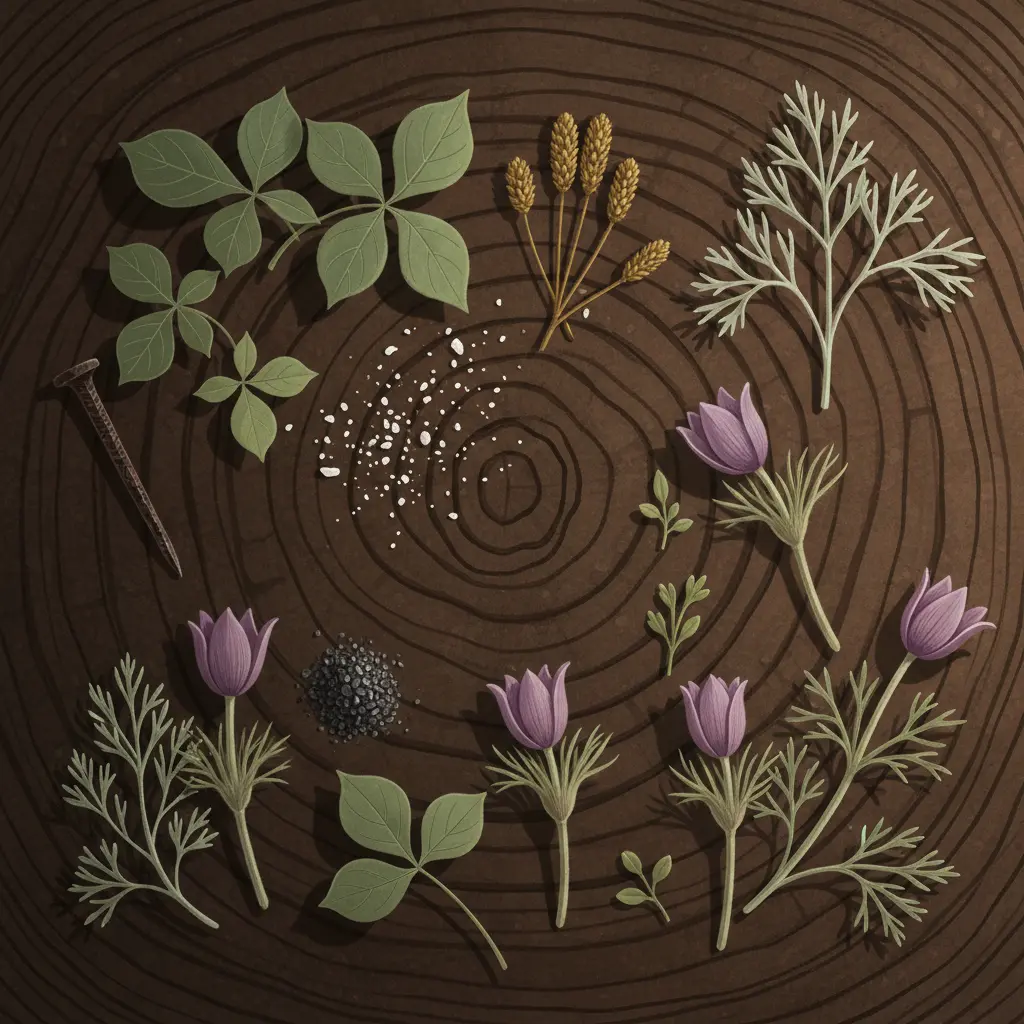
Restless legs, the compulsion to move at night and the tearing, crawling, twitching that pulls a sufferer out of bed to pace, responds to six well-defined remedies in the classical materia medica: Rhus toxicodendron, Arsenicum album, Lycopodium clavatum, Cina maritima, Ferrum metallicum, and Pulsatilla nigricans. Each meets a different self-expression of the organism, and prescribing the wrong one because the leg symptom is the same fails predictably.
Quick Answer
| If the leading feature is… | Consider |
|---|---|
| Restlessness relieved by continued motion, worse after rest | Rhus toxicodendron 30C |
| Midnight anguish, chilliness, fear, exhaustion | Arsenicum album 30C |
| Aggravation 4–8 p.m., bloating, right-sided twitching | Lycopodium clavatum 30C |
| Twitching, jerking child, cross temper, teeth-grinding | Cina maritima 30C |
| Anemic patient, forced to move, walks slowly | Ferrum metallicum 30C |
| Wandering pains, worse warmth, better open air | Pulsatilla nigricans 30C |
1. Rhus toxicodendron — The Restless Movement Remedy
Best when: the legs will not lie still, the patient tosses, gets up, walks about, and finds that continued motion eases the ache.
Rhus toxicodendron is the great remedy of restlessness that improves with movement. Hahnemann's proving records restlessness of both mind and body at night, and an extreme restlessness that keeps the patient constantly shifting position. Stiffness comes on during rest. First motion hurts. Then the limb limbers up. Sciatica improves from warmth and exercise. Backaches compel constant movement in bed. Pains are tearing, shooting, stitching, and parts feel sore, bruised, stiff, as though the flesh were torn from the bones. Ailments follow getting wet while perspiring, over-lifting, or straining a single part. Coldness in the left tibia is characteristic. So is numbness in a limb lain on. Cold, damp weather makes it worse. Many symptoms, old injuries and back pains above all, are notably better after a storm, an electric one above all—a peculiarity that, when the patient volunteers it, strongly confirms the remedy.
For acute nightly restless legs in this picture, give 30C two or three times through the evening and taper as the impulse to move quiets. Chronic cases, often patients with old back or ankle injuries that never fully healed, respond to a single dose of 200C and observation. The prescriber should read the totality. Fears at night, inability to remain in bed, and dwelling on past disagreeable occurrences after midnight confirm the remedy as strongly as the leg itself.
2. Arsenicum album — Midnight Anguish and Exhaustion
Best when: the restlessness carries anxiety, chill, and fear of dying, and the patient wakes worst around midnight, exhausted yet unable to stay still.
Arsenicum album is restlessness with anguish. The organism does not merely twitch; it panics. Kent's cadence reads directly onto the picture of restless legs in the anxious, fastidious patient who wakes between midnight and three and cannot bear the bed: "changes place continually," "anguish and restlessness," "must sit up." Burning pains that improve with heat are the hallmark. The legs may feel as though hot needles ran through them, and yet a warm blanket comforts more than cool air. Exhaustion runs out of proportion to the trouble. Fear of being alone drives the patient to wake a spouse. Chilliness runs deep. Feet are cold.
Give 30C on retiring, and again at the first waking. Where the picture is chronic, the anxious insomniac who has lived with restless legs for years, a single 200C weekly or a single 1M is more effective than repeated low potencies. The remedy is deep-acting and does not want hourly dosing.
3. Lycopodium clavatum — Evening Aggravation, Bloating, Right-Sided
Best when: symptoms begin between 4 p.m. and 8 p.m., the abdomen bloats after eating, and legs on the right side twitch or cramp first.
Lycopodium clavatum enters through the digestive and hepatic terrain. The characteristic 4-to-8 p.m. aggravation shows itself as evening comes on. The patient sits down after a heavy supper, the belly distends with fermentation like yeast, and the legs begin to jerk. Symptoms run from right to left. Calf cramps at night arrive with cold feet, red sand in the urine, and a craving for sweets that the patient cannot resist even knowing they will worsen the picture. The mental keynote of anticipatory anxiety, loss of self-confidence, and irritability on waking often accompanies the physical restlessness in the professional patient who worries the day into the night.
Give 30C an hour after the evening meal and repeat if the twitching returns. Chronic cases with the full constitutional picture, the thin, worried, bloated Lycopodium patient, warrant a single higher dose at 200C or 1M and several weeks of observation. Do not press through the aggravation window with repeated doses. The remedy needs room to act.
4. Cina maritima — The Twitching, Jerking Child
Best when: the restless legs belong to a cross, hungry child who grinds their teeth at night, picks at the nose, and cannot bear to be touched.
Cina is preeminently a worm remedy, and its restlessness in the limbs is the reflex expression of abdominal irritation. The picture includes twitching, spasms, convulsions in which the hands and feet jerk violently, and a child who, during spasms, flings the arms from one side to the other. The left foot may be in constant spasmodic motion. What identifies Cina is the whole picture around the leg. Dark rings around the eyes. One cheek red, the other pale. Canine hunger that does not translate into weight. Grinding teeth. Nocturnal bedwetting worse at full moon. The peevish, hard-to-please temper that rejects what it just asked for. In an adult presentation the picture is rare but real; suspect it where restless legs coexist with anal itching, bruxism, and a history of parasitic infestation.
Give 30C at bedtime for several nights. If the leg movements quiet but the wider picture persists, repeat weekly. The prescriber's usual error with this remedy is to give it for the twitching alone. Without the temper, the hunger, and the abdominal texture, the response is poor.
5. Ferrum metallicum — Restless Legs of the Anemic
Best when: the patient is pale with flushed cheeks, weak yet forced to move, and cannot lie still through the night despite exhaustion.
Ferrum metallicum is the remedy of restlessness in weakness. The Ferrum patient looks strong, flushed, plethoric, and is in fact chlorotic, breathless on the least exertion, easily bruised. The restlessness drives the patient out of bed, wanting to move from one bed to another. Nightly pains compel motion of the part. Palpitations come with the movement. The patient can neither sit nor stand and must move about slowly. The connection to iron-deficiency states, to postpartum anemia, to the woman who has lost too much blood at her menses, is direct.
The potency register matters here more than for any other remedy on this list. Ferrum in the mother tincture and low decimals (Ø, D1–D6) is a nutritional and organopathic preparation with real dosimetry; the interactions and cautions of iron supplementation apply in that form. Ferrum 30C and above is the dynamic preparation, prescribed on the totality of the case, where no material iron is present and dose-based data do not apply. The classical restless legs indication belongs to 30C and higher. Low decimals belong to a different prescribing register and a different clinical calculation. Give 30C in the evening and reassess after a week; the fatigue should lift before the leg symptom does.
6. Pulsatilla nigricans — Wandering, Better in the Open Air
Best when: pains shift from one leg to the other, worse in a warm room and warm bed, and the patient throws off the covers and seeks a cool window.
Pulsatilla nigricans is the great weather-cock remedy. Symptoms shift, alternate, wander. The restlessness has none of the anguish of Arsenicum and none of the tearing quality of Rhus. It is a heaviness, a bandaged feeling, a great inclination to stretch the feet. The Pulsatilla patient is markedly worse from warmth, worse from a heavy quilt, worse in a stuffy bedroom, and better the moment a window is opened. Thirst is absent even when the mouth is dry. Varicose veins accompany the picture in older women. The mental register of the mild, tearful patient who craves company and consolation and weeps before menses is what distinguishes Pulsatilla from Rhus at the bedside when both patients toss and turn.
Adolescent girls at menarche—the patient who is "never well since puberty" is a classical Pulsatilla constitution—pregnant women in the third trimester, and postmenopausal women with varicosities are the classical Pulsatilla constituencies for restless legs. Give 30C in the evening for one to three nights. A chronic case with the full constitutional picture takes 200C as a single dose and waits.
How to Choose Between These Remedies
The leg symptom is not the differentiator. Six patients with the same complaint divide by mental state, thermal reaction, time of aggravation, and concomitant.
A woman in her early fifties came to consultation for two years of restless legs. The neurologist had offered ropinirole; she had refused it. She described the sensation as "having to move," worse the moment she lay down, better as soon as she got up and walked the hallway. An old back injury from a fall in her thirties still stiffened in wet weather. She woke at three most mornings ruminating on a quarrel with her sister from a decade earlier that she had never spoken about aloud. Rhus toxicodendron 200C, single dose. She slept through the following night for the first time in the two years and remained well on a repeat at six weeks.
That case turned on the concomitant, not the leg. The Arsenicum patient would have woken with terror rather than rumination. The Pulsatilla patient would have thrown off the quilt. The Lycopodium patient would have located the trouble in the right leg after a heavy supper. The prescriber who reaches for Rhus every time the legs are restless prescribes six times and meets the patient once.
The Rhus and Pulsatilla differential is the one that most often goes wrong at the bedside, because both patients rise and pace, and both describe the sensation in almost identical language. Four questions settle it. Ask about the quilt: the Rhus patient pulls it up to the chin and asks for a second one; the Pulsatilla patient kicks it off within ten minutes of lying down and cracks the window even in winter. Ask about the direction of relief in movement: Rhus improves the longer the walking continues, and the first steps out of bed are the worst; Pulsatilla improves only once cool air reaches the skin, and the walking itself is incidental. Ask about thirst: Rhus sips cold water through the night; Pulsatilla, dry-mouthed, refuses the glass. Ask about what the patient does with grief: the Rhus patient sits up in the dark and turns an old quarrel over in silence; the Pulsatilla patient weeps at the first kind word and wants the hand held. A parallel discrimination separates Arsenicum from Rhus in the anxious insomniac. Arsenicum's restlessness is driven from within by fear of dying and cannot be talked down; Rhus's restlessness is driven from the limb itself, and the mind, though wakeful, is not terrified. The Arsenicum patient wants light in the room, a person nearby, and hot drinks in small sips; the Rhus patient wants only to move, and will pace an empty hallway alone for an hour without complaint.
Where the picture is not clear, do not medicate. Take the case again. Thermal state, time of day, position that relieves, mental register, food that worsens. Let the remedy declare itself. A well-taken case decides between these six in an evening.
Frequently Asked Questions
Are these remedies safe alongside iron supplements or ropinirole?
The 30C and higher potencies discussed above contain no molecular substance and cannot pharmacologically interact with conventional prescriptions. Ferrum metallicum in mother-tincture or low-decimal form is a different matter and belongs to a different prescribing register. That form carries real dosimetry and should not be combined with iron supplementation without close attention.
How long should a remedy be given before deciding it has failed?
For acute nightly restless legs, three evenings at 30C is enough to see whether the picture responds. For chronic constitutional prescribing at 200C or 1M, wait four to six weeks. Repeated dosing that produces no change usually indicates the wrong remedy, not too low a potency.
Does restless legs always indicate iron deficiency? No. Ferrum metallicum meets one subset of cases: the anemic, the postpartum, the woman who has lost blood at her menses. The majority of restless legs presentations belong to Rhus, Arsenicum, or Pulsatilla by mental and thermal picture. A ferritin measurement is useful for the organopathic question. It does not settle the homeopathic prescription.
Can restless legs in children be treated on the same principles? Cina is the specific pediatric picture where teeth-grinding, nose-picking, and hunger without weight gain accompany the leg movements. In children the restlessness of Rhus and the anguish of Arsenicum also appear, but the Cina picture is unmistakable when it is present.
Related Reading
For broader context on the terrain in which restless legs sit, see the musculoskeletal and head and neurological condition hubs. On matching potency to case, see the glossary entry on potency. On the diagnostic weight of a distinguishing symptom, see keynote.
References
- Hahnemann S. Organon of the Medical Art, 6th edition. Aphorisms on the totality of symptoms and individualized prescribing.
- Boericke W. Pocket Manual of Homoeopathic Materia Medica with Repertory. Entries for Rhus toxicodendron, Arsenicum album, Lycopodium clavatum, Cina, Ferrum metallicum, and Pulsatilla nigricans.
- Kent JT. Lectures on Homoeopathic Materia Medica. Chapters on Rhus toxicodendron, Arsenicum album, Pulsatilla nigricans, and Ferrum metallicum.