What Are the Best Homeopathic Remedies for Sunburn?
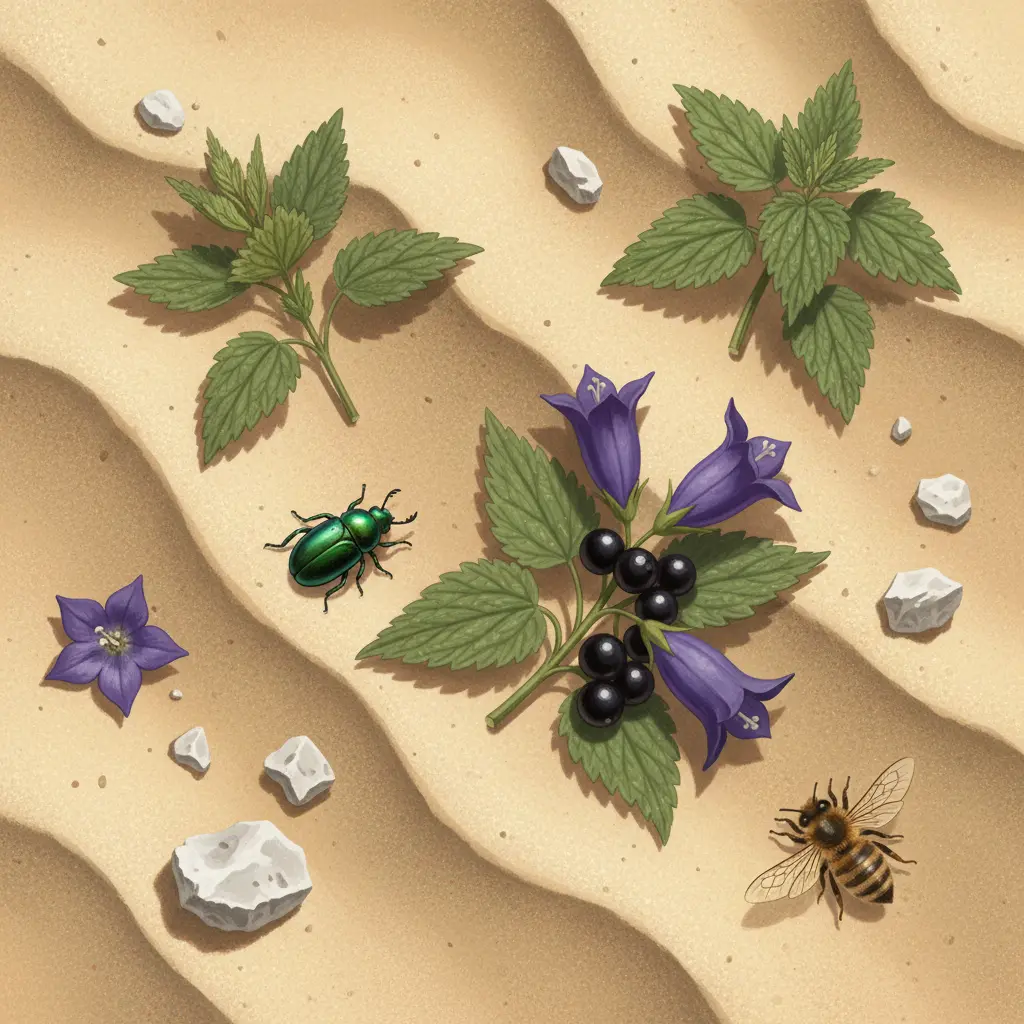
The best homeopathic remedies for sunburn are Cantharis, Urtica urens, Belladonna, Causticum, and Apis mellifica, chosen by the sensation and skin sign the reaction produces rather than by hours of exposure. Cantharis meets the vesicated, raw, blistering burn. Urtica urens covers the shiny, itching burn without much blistering. Belladonna sits with the throbbing, radiant, bright-red first-degree flush. Causticum answers the old burn that will not close. Apis meets the puffy, edematous burn with rosy hue and stinging pain. Each is prescribed on the totality of the case; the sunburn is the presenting complaint, not the diagnosis being treated.
Quick Answer
| Remedy | Best when |
|---|---|
| Cantharis | Blistering, raw, biting; vesicles rising; cold applications ease |
| Urtica urens | Superficial burn, intense itching and stinging, no blistering |
| Belladonna | Bright red, hot, dry, radiantly throbbing skin, sudden onset |
| Causticum | Old burn that will not close; scarred or contracted skin |
| Apis mellifica | Puffy edematous swelling, rosy hue, stinging pain, worse from heat |
1. Cantharis — The Blistering Burn Remedy
A carpenter of thirty-eight came into the clinic on a Tuesday evening in early August with vesicles rising along both forearms and the bridge of his nose after a day laying deck boards on a client's south-facing roof. He had drunk iced tea by the gallon and had left the hat off because it slid on the sweat. The pain, he said, was not soreness — it was the sensation of skin scraped bare, as if scoured with a wire brush, and he could not bear the drape of his shirt cuff on the forearm; each ridge of thread registered as a fresh scoring, and he had driven home with the sleeves rolled and the window down to keep the wind off the skin. What decided the prescription was not the blisters or the burning surface. Halfway through the intake he asked, half-embarrassed, whether the visit could also address a stinging urgency to urinate that had come on that afternoon — passing only a scald of a few drops each time, with a burning that outlasted the act itself — and that he had been assuming was unrelated to the sun. Cantharis carries both pictures in one — Clarke sets the urinary irritation alongside the burn — and where the two appear together the remedy is confirmed. He took 200C at the door and again at bedtime; the urinary sting eased within the hour, before the skin had visibly changed, and by Thursday the vesicles had drained and the bladder complaint had gone with them. The order matters clinically: in Cantharis the urinary picture very often lifts first, and the skin follows within a day or two, a sequence worth listening for whenever a sunburn brings a second complaint alongside it.
The textbook picture, as Boericke describes it, is indistinguishable from a serious sunburn: burns and scalds that are raw and smarting, soothed by cold applications and then followed by excessive inflammation, the inflammation itself either violently acute or swiftly destructive. The classical prescription is 30C or 200C, three or four doses in the first day, spacing out as the reaction quiets. A lotion of a few drops of the 30C in an ounce of cool water can be sponged onto intact skin. A single 200C at bedtime often carries a small child through the first night without further intervention. Rest, shade, and no further sun exposure while the tissues settle.
2. Urtica Urens — The Shiny, Stinging Burn Remedy
The sensation carries the case: the sting of the nettle held for a beat, more itch than pain, on skin that looks glossy and pink rather than blistered. The indication is the shiny sunburn with a stinging, burning pain, and the principal pains of the remedy are burning, stinging, itching and soreness. The redheaded reader who spent the afternoon on the terrace and comes back with a scalp that itches more than it hurts; the child at the pool whose shoulders have pinked into raised, weal-like blotches; the sailor whose palms have burned along a hot rail. These are the sunburns of Urtica urens. Nettle rash and true sunburn overlap here, since the patient prone to hives from strawberries or shellfish is often the patient whose skin reacts to the sun with the same pattern.
What acts here — as in every remedy in this differential — is the potentized dynamic preparation, prescribed on the totality of the case; the sunburn is the entry point, not the pharmacological target. At 30C internally, two or three doses through the first hours, the itching and stinging settle from within rather than only on the surface. Urtica urens is unusual in that a second, dose-based register is also in active clinical use: Boericke's traditional topical, the mother tincture (Ø) diluted in cool water and sponged onto first-degree skin, is a herbal application, and Burnett's caution that repeat oral use of the tincture can affect the flow of milk belongs to the same low-decimal, measurable-dose territory. The two registers are not interchangeable, and it is the internal 30C that answers the case on the totality. Keep the skin out of further sun while the reaction runs.
3. Belladonna — The Throbbing First-Degree Burn
Bright red, radiantly hot, dry, and pounding with the pulse — the modality carries this case before any dosing question opens. A face returns from the golf course, from the vineyard, from the harbor terrace flushed a scarlet that does not blanch under pressure, and the child who was fine at lunch now lies on the sofa with throbbing carotids and a headache that worsens with the least jarring of the couch. Boericke's picture reads for this exactly: a flushed face, hot red skin, dilated pupils and throbbing carotids, with pronounced burning heat and a bright, dry redness. Discharges are hot and scanty. The mouth is dry and there is no thirst; the last of these is idiosyncratic and highly confirming, since most feverish and sunburned patients ask for water.
Prescribe 30C every two to four hours while the flush persists. Belladonna is often the first remedy given for sunstroke after too many hours in the field, before tissues have moved into vesication. If blisters then rise, the case has moved on and Cantharis follows. A dry mouth without thirst, a startling headache, and light and noise intolerance confirm Belladonna. Move the patient indoors, dim the light, cool the skin with cloths, and hold sun exposure off for at least a day beyond apparent recovery.
4. Causticum — The Burn That Will Not Close
Where Cantharis meets the acute vesicating stage, Causticum picks up what Cantharis has left unresolved — the case that never quite came off the boil and drifted into the chronic. Clarke's materia medica counts the after-effects of burns and scalds among its causations, and the clinical rubric carries burns as a principal use. This is the shoulder that peeled two months ago and now sits under a patch of stiff, dirty-sallow skin. It is the middle-aged carpenter whose forearms every August pull tight along an old scald from apprenticeship. It is the woman who was severely sunburned in her twenties and whose face, twenty years on, still crimps around the same cheekbone under any solar exposure. The characteristic sensation is rawness with an underlying stiffness or contracture of the tissue; the same patient often carries warts on the eyebrow, slow-healing fissures at the nostrils, or an old drooping eyelid.
Causticum is a chronic remedy first and an acute one second. Prescribe 30C daily for a week, then weekly, and let the case unfold. Higher potencies at longer intervals suit constitutional pictures in which the burn is one thread of a larger fabric. It complements Cantharis where the acute vesicating stage did not fully clear and something has stayed behind.
5. Apis Mellifica — The Edematous, Rosy, Stinging Burn
Best when: The skin puffs, eyelids and lips swell, the burn stings like a fresh insect bite, and cold applications relieve.
Apis meets the sunburn that reacts allergically. Tissues swell out of proportion to the actual exposure. Eyelids close, lips bloat, shoulders puff into raised rosy patches, and the remedy's keynote — sharp, burning, stinging pain with marked swelling — is what drives the sudden shriek. Boericke and Clarke give the picture in the same terms: parts that swell or puff up, edema, a rosy red color, soreness and stinging pains, and an inability to tolerate heat. The very fair patient (the blue-eyed child, the redheaded adult, the freckled traveler) who reacts to any solar exposure with hives and edema sits here, as does the swimmer whose burn is complicated by a jellyfish welt or a wasp sting acquired the same afternoon. Thirst is absent even when the swelling looks alarming; Apis is one of the classical thirstless-with-edema pictures.
Give 30C every two hours in the acute phase, spacing as the swelling recedes. Where the reaction involves the throat or the face and is progressing, higher potencies are appropriate and the case wants direct oversight rather than home prescription. Urtica urens holds the classical antidote relationship to Apis and to bee stings, so where nettle rash and true sunburn are indistinguishable, the two remedies cover the same ground from complementary angles. Cool compresses. Keep the patient off heat and out of a hot shower.
How to Choose Between These Remedies
Choose by sensation and by what the skin is doing, not by hours in the sun.
Belladonna answers bright red, dry, radiantly hot skin that pounds with the pulse. Cantharis meets the blistered, raw burn ameliorated by cold. Urtica urens covers the shiny surface that itches more than it burns. Apis takes the puffy, stinging, warmth-aggravated reaction. Causticum enters where the burn is old, contracted, or refuses to close.
For a burn confined to a small area a 30C dilution can be sponged onto intact skin alongside the internal dose; for an extensive reaction the internal dose carries the heavier work.
Frequently Asked Questions
How quickly should a sunburn remedy work?
Within an hour or two for the acute picture. If the sting is unchanged by the third dose of a well-chosen 30C, the case is not that remedy. Reread the modalities and consider the next remedy in this list before repeating.
Can homeopathic remedies be combined with cool compresses or Calendula tincture?
Yes. Cool compresses ease the reaction in every one of these pictures, and classical prescribing does not preclude straightforward physical measures. Calendula tincture diluted in water is often used in parallel where the skin is still intact, especially in children.
What about the fair child who burns every summer without fail?
That picture is constitutional rather than acute. Causticum is one candidate where the tissue has already contracted or scarred; the wider prescription depends on the whole child, and is a case for individual assessment rather than the first-aid rubric.
When should Urtica urens be preferred over Cantharis?
When the burn has not blistered and the dominant sensation is itching and stinging rather than the raw feel of scraped skin. The Urtica surface is glossy and pink; the fingertips pass over it without catching. The Cantharis surface is broken or on the point of breaking, and even the light drag of a linen sheet registers as another abrasion. Cold applications ease both, but with Cantharis the amelioration is dramatic and decisive — the patient reaches for the cold cloth again and again — while with Urtica the itch tends only to move rather than resolve fully under cold. Cantharis tends to draw a stinging urinary irritation into the same picture, sometimes hours before the skin has finished declaring itself; Urtica urens does not, but is more likely to appear in the patient with a hives history — strawberries, shellfish, plant contact — and to leave, once the acute reaction has passed, a wheal-prone skin that flares again on the next warm day. If vesicles have risen or the skin is denuded, Cantharis leads; Urtica urens follows only if a persistent itch remains after the acute stage has settled.
Related Reading
References
- Boericke, W. Pocket Manual of Homœopathic Materia Medica with Repertory. Entries on Cantharis, Urtica urens, Belladonna, Causticum, and Apis mellifica.
- Clarke, J. H. A Dictionary of Practical Materia Medica. Entries on Cantharis, Urtica urens, Causticum, and Apis mellifica.
- Hahnemann, S. Organon of the Medical Art, 6th edition. §7–§18 on the totality of symptoms and the character of the presenting case.
- Burnett, J. C. Clinical observations on Urtica urens, drawn upon as recorded in Clarke's Dictionary of Practical Materia Medica.